Address
304 North Cardinal
St. Dorchester Center, MA 02124
Work Hours
Monday to Friday: 7AM - 7PM
Weekend: 10AM - 5PM
Address
304 North Cardinal
St. Dorchester Center, MA 02124
Work Hours
Monday to Friday: 7AM - 7PM
Weekend: 10AM - 5PM
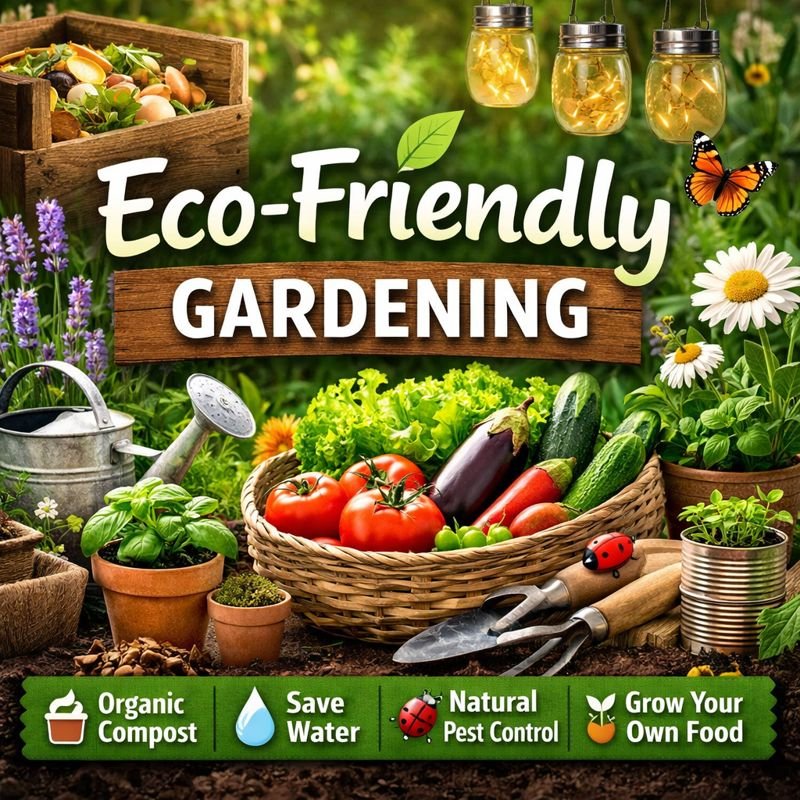
Eco-friendly gardening is more than just a trend—it’s a way to protect nature while growing beautiful plants, vegetables, and flowers. Whether you have a small balcony, backyard, or rooftop garden, you can make a big impact by choosing sustainable gardening methods.
In this guide, you’ll learn how to create a green, chemical-free, and environmentally friendly garden that saves money and supports the planet.
Eco-friendly gardening means growing plants in a way that protects the environment. It focuses on:
The goal is to work with nature instead of against it.
Switching to sustainable gardening gives you many benefits:
It’s good for your garden and great for the planet.
Healthy soil is the foundation of eco-friendly gardening.
Instead of chemical fertilizers, use:
Compost improves soil quality, helps plants grow faster, and keeps your garden natural.
Water is precious, so don’t waste it.
Here’s how to save water:
This keeps your plants hydrated while reducing water bills.
Native plants grow easily in your area and need less water and care. They also attract bees, butterflies, and birds.
Some great options:
These plants help maintain nature’s balance in your garden.
Chemical sprays kill helpful insects and harm soil.
Instead, try natural pest control:
These methods protect your plants without polluting the environment.
Eco-friendly gardening is also about reducing waste.
You can use:
This saves money and keeps waste out of landfills.
Growing vegetables at home is one of the best eco-friendly habits.
Try growing:
You’ll get fresh, chemical-free food right from your garden.
Let sunlight do the work.
Nature provides everything—just use it wisely.
Eco-friendly gardening is a simple but powerful way to protect the earth. With organic soil, water saving, natural pest control, and recycling, you can create a beautiful garden that supports both nature and your family.
Even small steps—like composting or planting herbs—make a big difference.
Start today, and let your garden grow green and clean 🌍💚