Address
304 North Cardinal
St. Dorchester Center, MA 02124
Work Hours
Monday to Friday: 7AM - 7PM
Weekend: 10AM - 5PM
Address
304 North Cardinal
St. Dorchester Center, MA 02124
Work Hours
Monday to Friday: 7AM - 7PM
Weekend: 10AM - 5PM
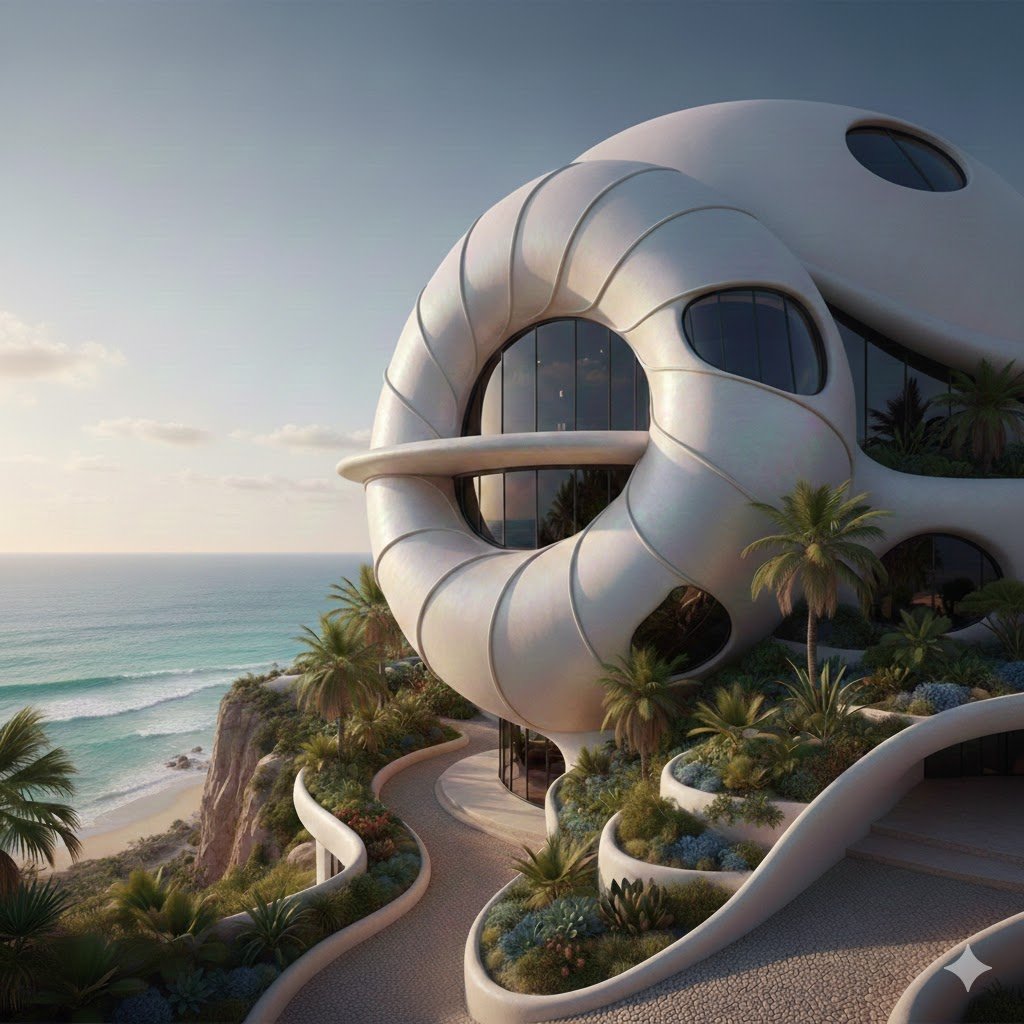
In an era where sustainability, wellness, and visual harmony matter more than ever, architecture is redefining itself. The age of rigid, box-shaped buildings is fading fast. In its place emerges a design philosophy rooted in nature itself—shell-inspired exterior design.
Inspired by seashells formed over millions of years, this architectural movement blends organic beauty, structural intelligence, and environmental efficiency. These homes don’t just look futuristic—they function smarter, feel calmer, and live better.
Welcome to the future of architecture, shaped by nature’s most elegant engineer.
Shell-inspired architecture is not a trend—it’s a response to how people want to live today. Homeowners and designers alike are seeking spaces that promote peace, efficiency, and sustainability while standing out visually.
Shell-based exterior designs offer:
Organic, flowing aesthetics
Exceptional structural strength
Passive energy efficiency
Emotional connection with nature
Unlike conventional buildings that dominate their surroundings, shell-inspired homes coexist with them.
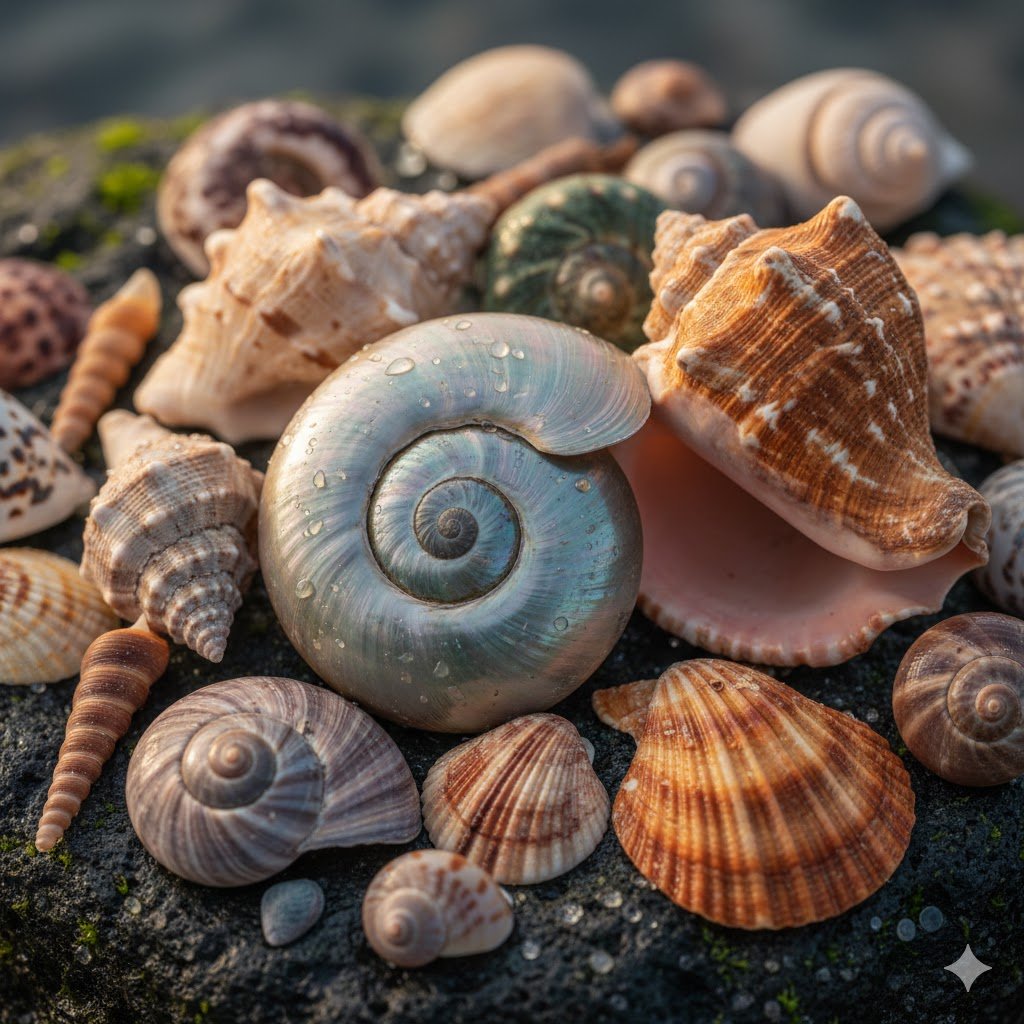
Curves feel natural to the human eye. Sharp angles signal tension; flowing forms signal safety. Shell-inspired exteriors use soft, continuous curves that subconsciously reduce stress and enhance well-being.
Living in a shell-inspired home often feels:
More calming
More spacious
More connected to nature
This emotional comfort is one reason organic architecture is increasingly used in luxury homes, wellness retreats, eco-resorts, and future cities.
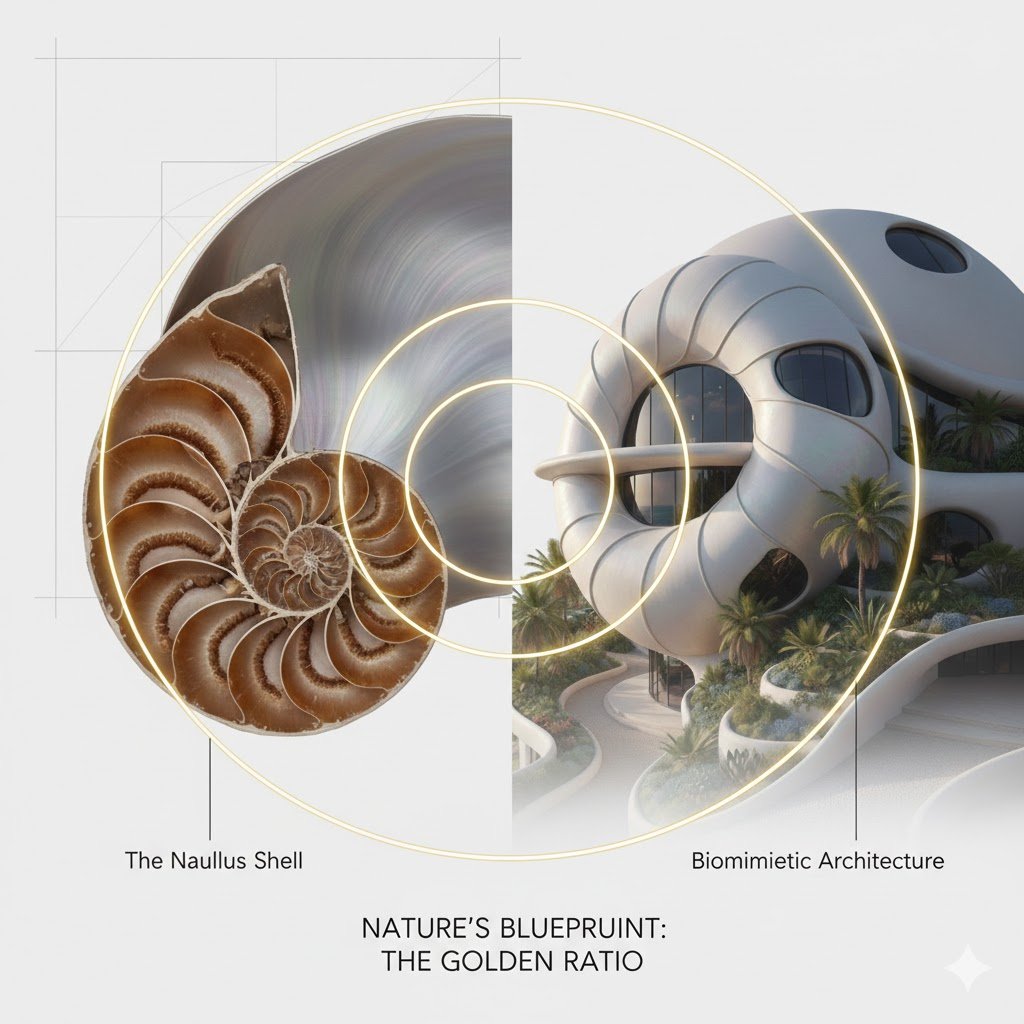
At the heart of many shells lies a logarithmic spiral based on the Golden Ratio (1.618)—a proportion found throughout nature, art, and the human body.
When architects apply these proportions to exterior design:
Buildings feel visually balanced
Interior spaces flow intuitively
Movement through the home feels effortless
This mathematical harmony isn’t decorative—it’s functional, improving spatial efficiency and visual longevity.
Despite their delicate appearance, shells are incredibly strong. Their curved forms distribute stress evenly, making them resistant to pressure, impact, and extreme environments.
Shell-inspired exteriors naturally deflect wind, rain, and storms. Their aerodynamic forms reduce pressure points, making them ideal for:
Coastal homes
High-wind zones
Climate-challenged regions
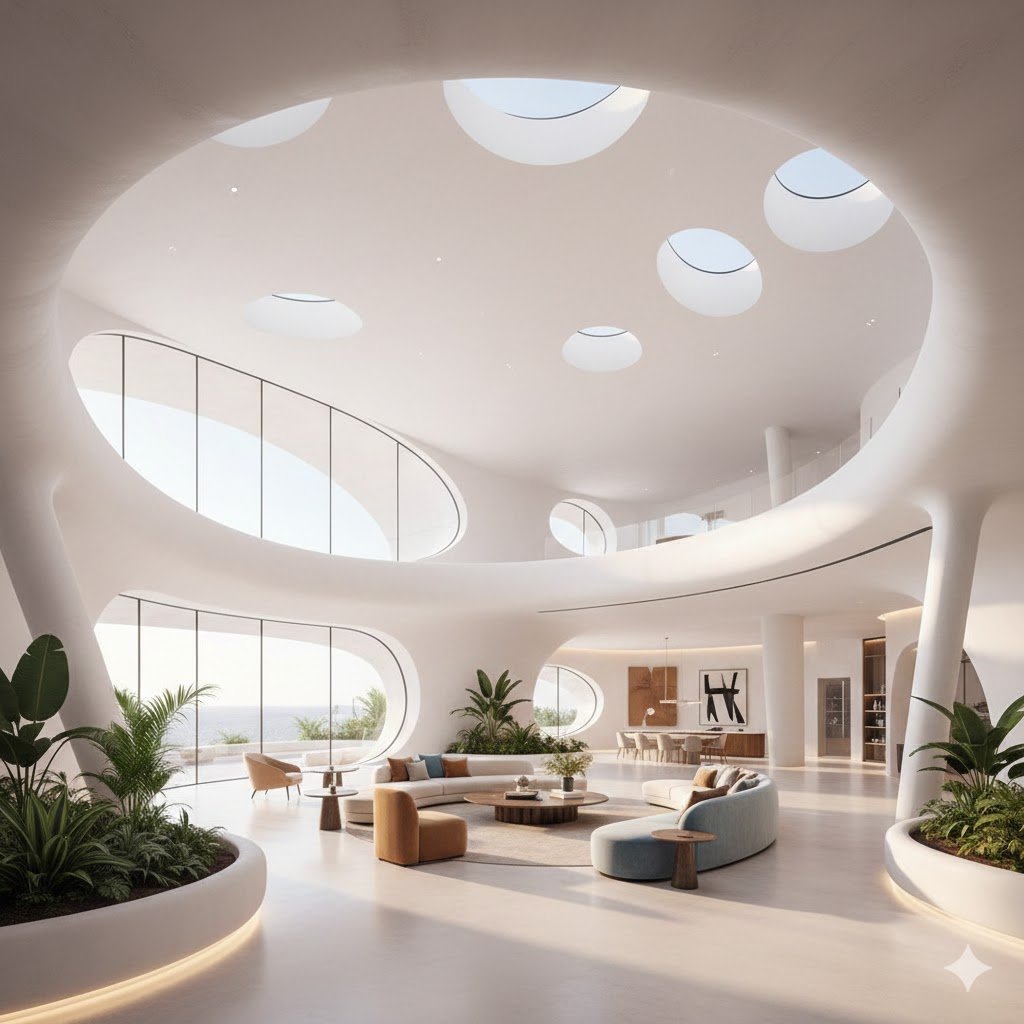
Because curved shells are self-supporting, these homes require fewer columns and internal walls. This allows for:
Open-plan layouts
Abundant natural light
Greater design flexibility
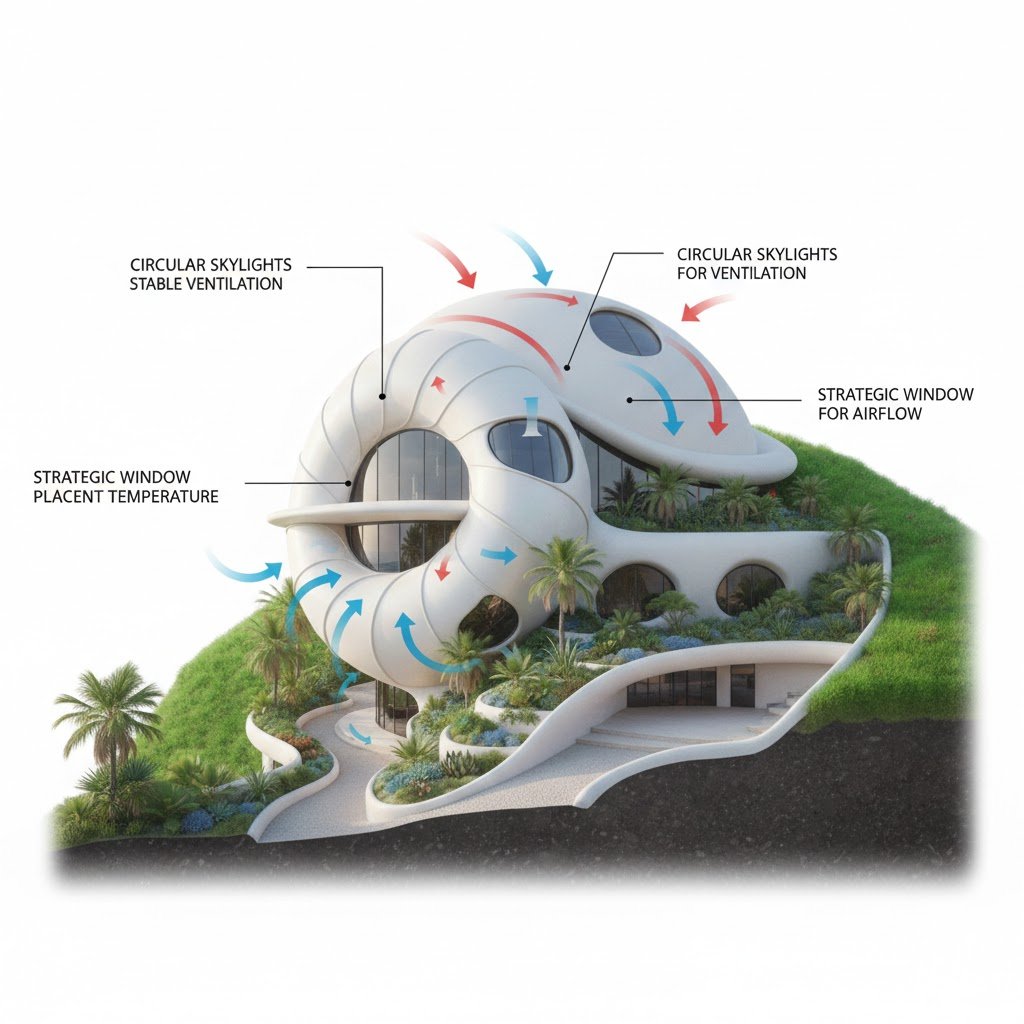
Shell-inspired exterior design excels at passive environmental control, reducing energy usage without sacrificing comfort.
Natural Ventilation
Curved surfaces encourage air circulation, allowing warm air to escape and cool air to flow naturally—reducing dependence on air conditioning.
Thermal Efficiency
The compact, rounded shape minimizes heat loss in winter and reduces heat absorption in summer.
Earth-Sheltered Integration
Many shell-inspired homes are partially embedded into the landscape. The earth acts as natural insulation, keeping indoor temperatures stable year-round.
High structural durability
Energy-efficient by design
Unique, timeless aesthetics
Better airflow and thermal comfort
Strong connection with nature
Higher initial construction cost
Requires specialized design expertise
Limited availability of experienced builders
Interior furnishing may need customization
Balanced design decisions lead to long-term rewards—both environmental and emotional.
| Feature | Shell-Inspired Design | Traditional Design |
|---|---|---|
| Shape | Curved, organic | Boxy, angular |
| Energy Use | Passive & efficient | High mechanical reliance |
| Structural Logic | Stress-distributing curves | Flat load-bearing walls |
| Visual Impact | Unique & timeless | Conventional |
| Environmental Harmony | High | Moderate |
As technology advances, shell-inspired exteriors are evolving rapidly through:
3D-printed concrete shells
AI-assisted biomimicry design
Recycled and bio-based materials
Smart glass and adaptive surfaces
These innovations are making organic architecture more accessible, affordable, and scalable for future cities.
Is shell-inspired architecture practical for everyday living?
Yes. These homes are highly functional, energy-efficient, and durable when designed correctly.
Are shell-inspired homes expensive?
Initial costs may be higher, but long-term savings on energy and maintenance often offset this.
Can shell-inspired designs work in urban areas?
Absolutely. Compact shell forms are ideal for dense environments and sustainable city planning.
Are shell-inspired homes eco-friendly?
Yes. They reduce energy consumption, use fewer materials, and integrate naturally with landscapes.
Shell-inspired exterior design is not about copying nature—it’s about learning from it. These homes represent a smarter, calmer, and more sustainable way of living, where beauty and performance coexist effortlessly.
As the world shifts toward mindful living and eco-conscious construction, shell-inspired architecture stands as a blueprint for what’s next.