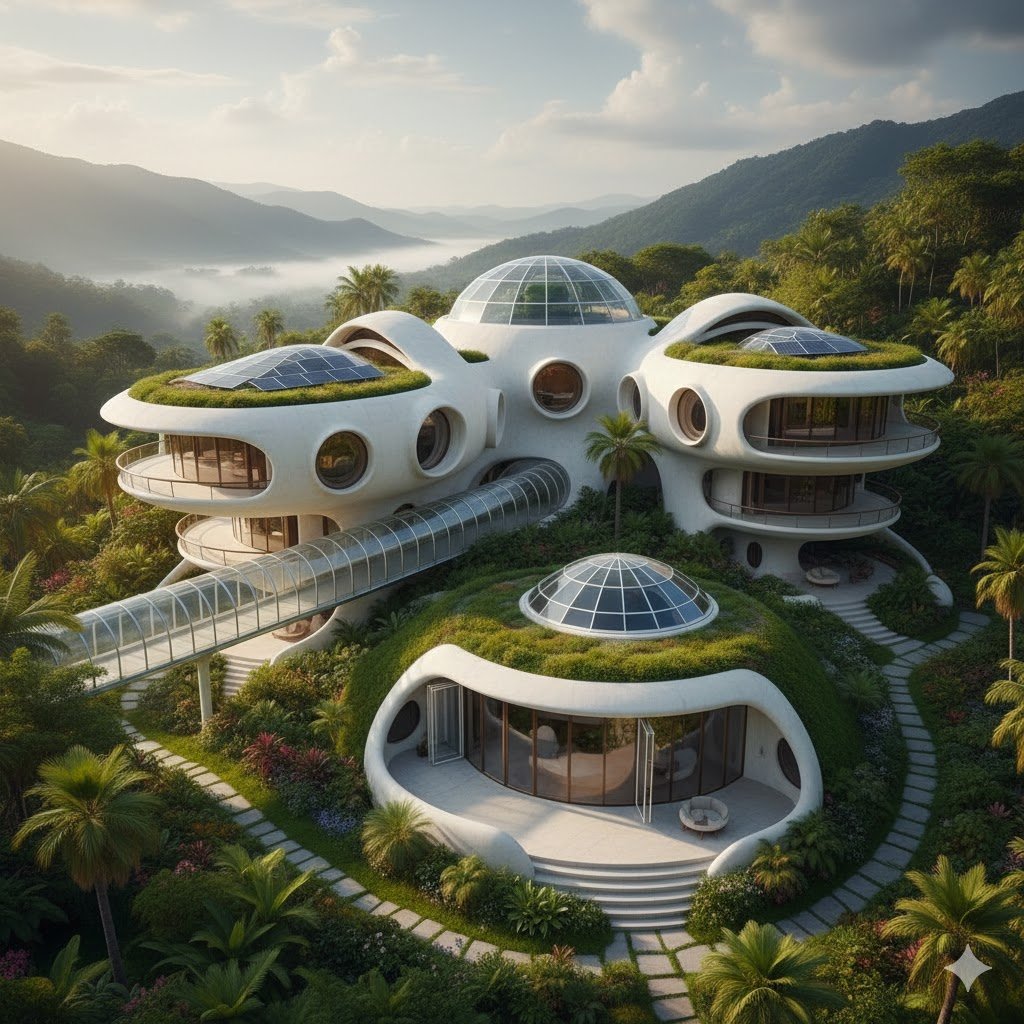
Beyond the Box: 15 Organic Home Extension Ideas to Transform Your Living Space

Whether you are growing your family or craving a more functional sanctuary, an extension is the ultimate way to evolve your home. By embracing natural geometry—like the curves of a seashell or the efficiency of a burrow—you can create a space that feels brighter and more connected to the earth.
1. The Nautilus Rear Extension
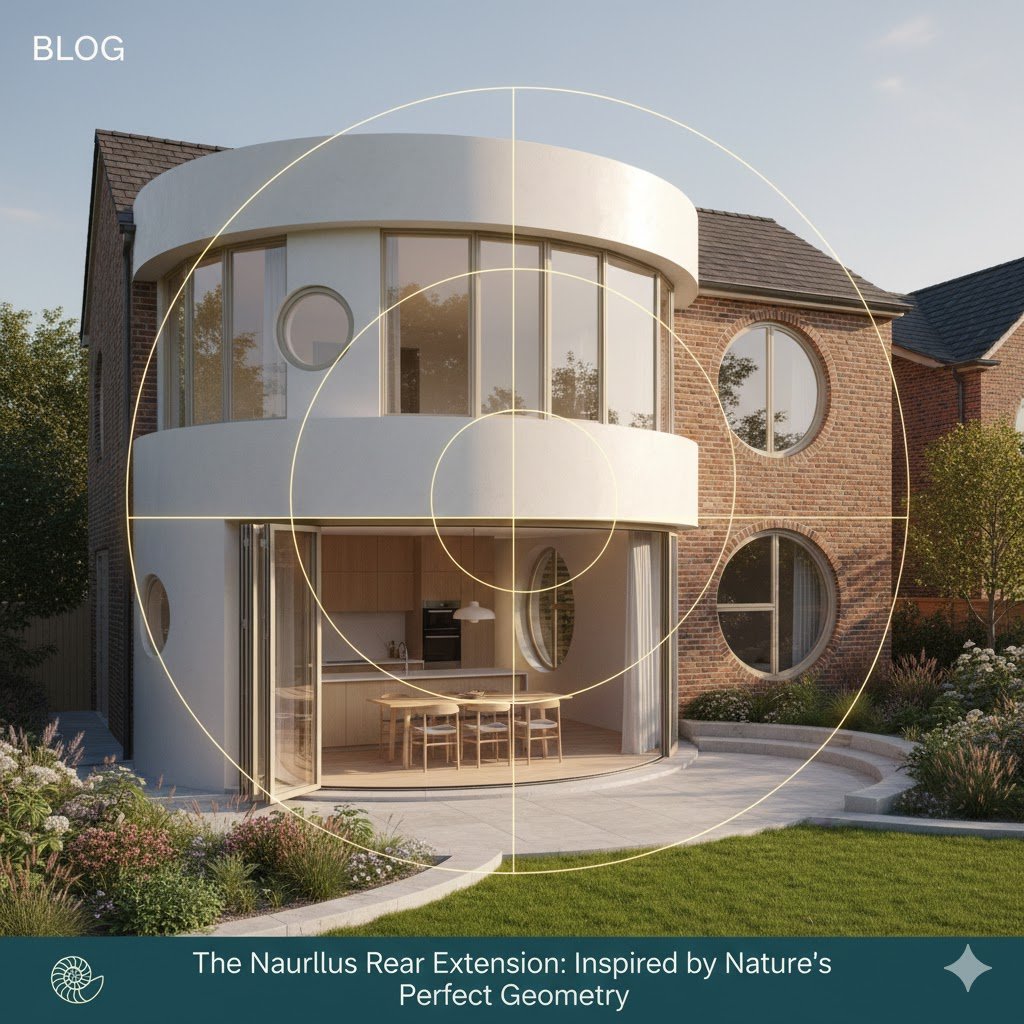
A contemporary two-story brick home featuring a white, circular rear extension inspired by the nautilus shell. The image includes a golden ratio spiral overlay to demonstrate the geometric design. The extension features large bi-fold doors opening to a stone patio, circular oculus windows, and an open-plan kitchen and dining area visible inside.

Adding a rear extension is the most popular way to increase square footage. Instead of a standard rectangular add-on, imagine a spiral-inspired layout that follows the Golden Ratio. This creates a natural flow from the kitchen to the garden, making the transition feel seamless rather than abrupt.

Visual Inspiration: Nature’s math provides the perfect blueprint for balance and tranquility.
2. Sculptural Front Porches
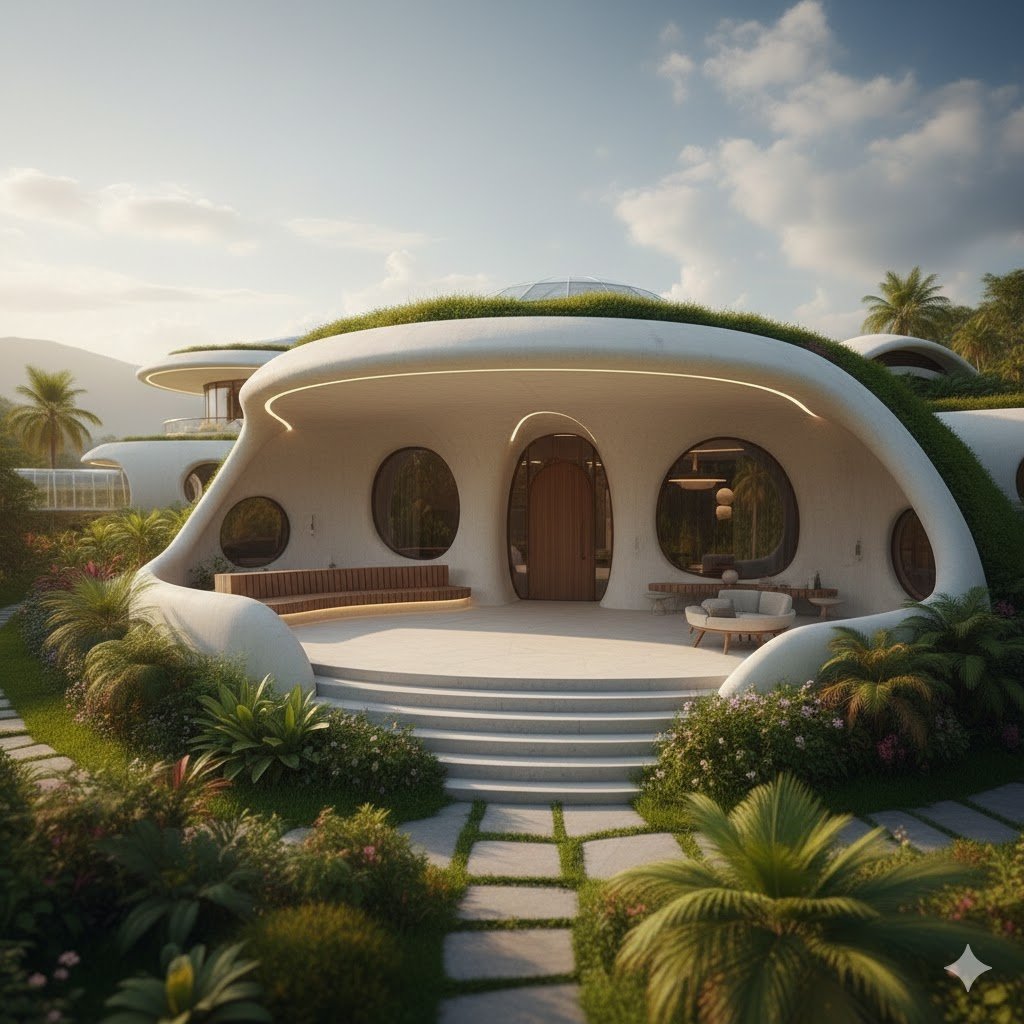
A striking front view of a sculptural, organic porch extension. The design features a smooth, white concrete canopy that flows into wide steps, housing an oval-shaped wooden front door flanked by small oculus windows. The structure is topped with a lush green roof and a glass pyramid skylight, surrounded by dense tropical landscaping.

If your entryway feels narrow, a front porch extension can add practical storage while boosting curb appeal. Using organic, flowing concrete forms instead of rigid pillars can turn a simple mudroom into a welcoming piece of sculpture.
3. The “Side-Yard” Sanctuary
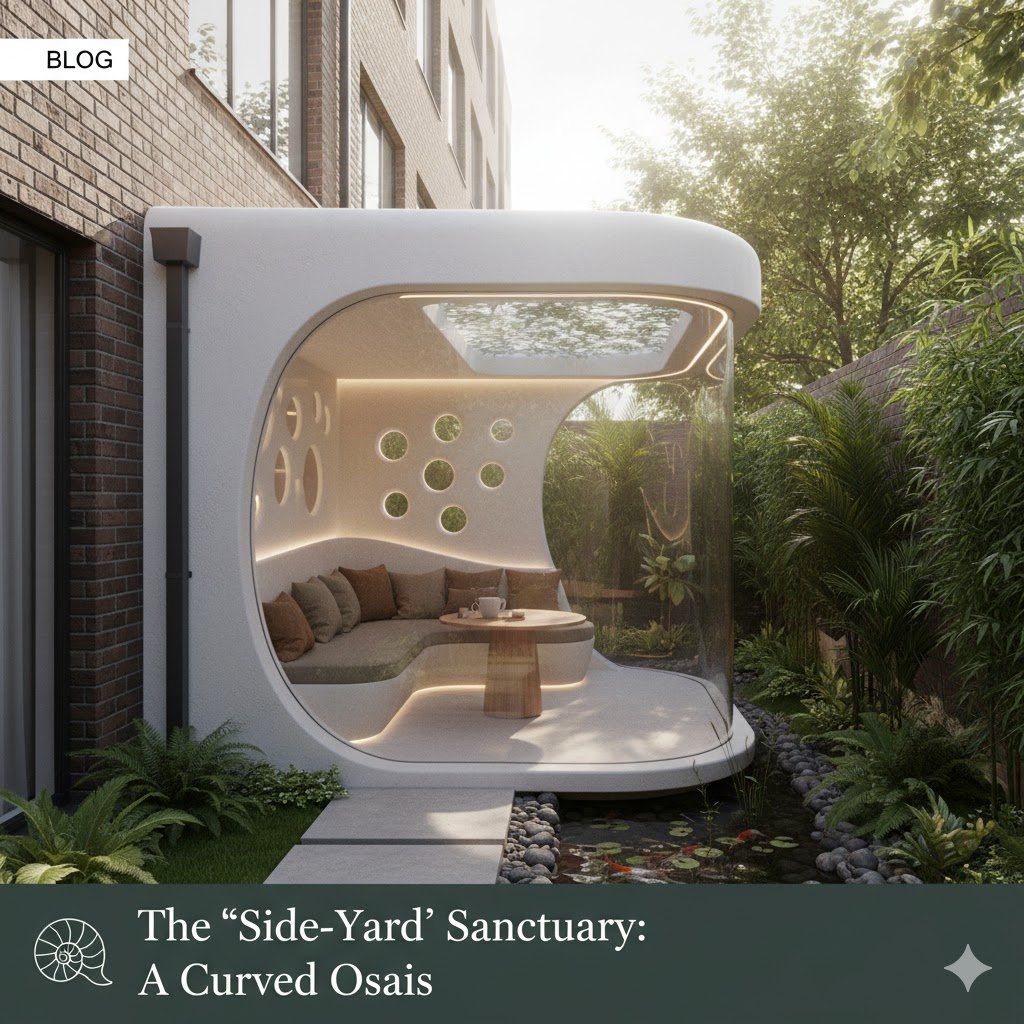
A cozy, white organic-shaped extension built into a narrow side yard of a brick building. The "sanctuary" features a large curved glass wall, several small circular oculus windows, and an integrated seating area with earth-toned cushions. A small garden pond with koi fish and lush ferns sits in the foreground, creating a tranquil outdoor-indoor transition.

Side extensions often deal with narrow, under-utilized spaces. Transform these into “nooks” with curved walls that mimic the chambers of a shell, perfect for a cozy dining area or a sunlit reading corner.
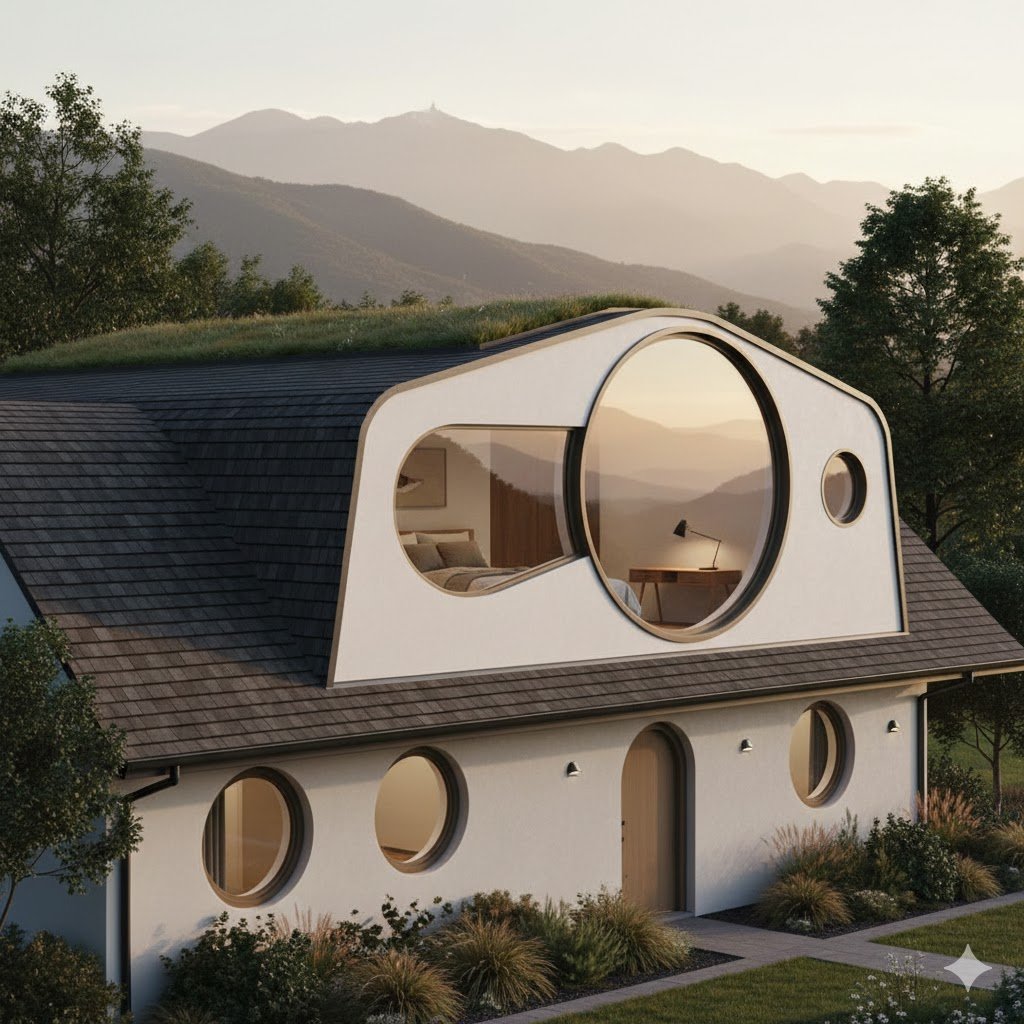
4. Loft Dormers with a View
A wide-angle exterior view of a white, organic-shaped loft dormer extension on a dark-shingled roof. The dormer features a massive circular glass window that reveals a cozy bedroom inside. The top of the extension is covered in a lush green living roof, and the home is situated against a scenic backdrop of rolling mountains at sunset.

A loft dormer maximizes upstairs space for offices or bedrooms. To elevate this, use circular or “oculus” windows. These port-like openings provide unique views and a sense of being in a high-altitude retreat.
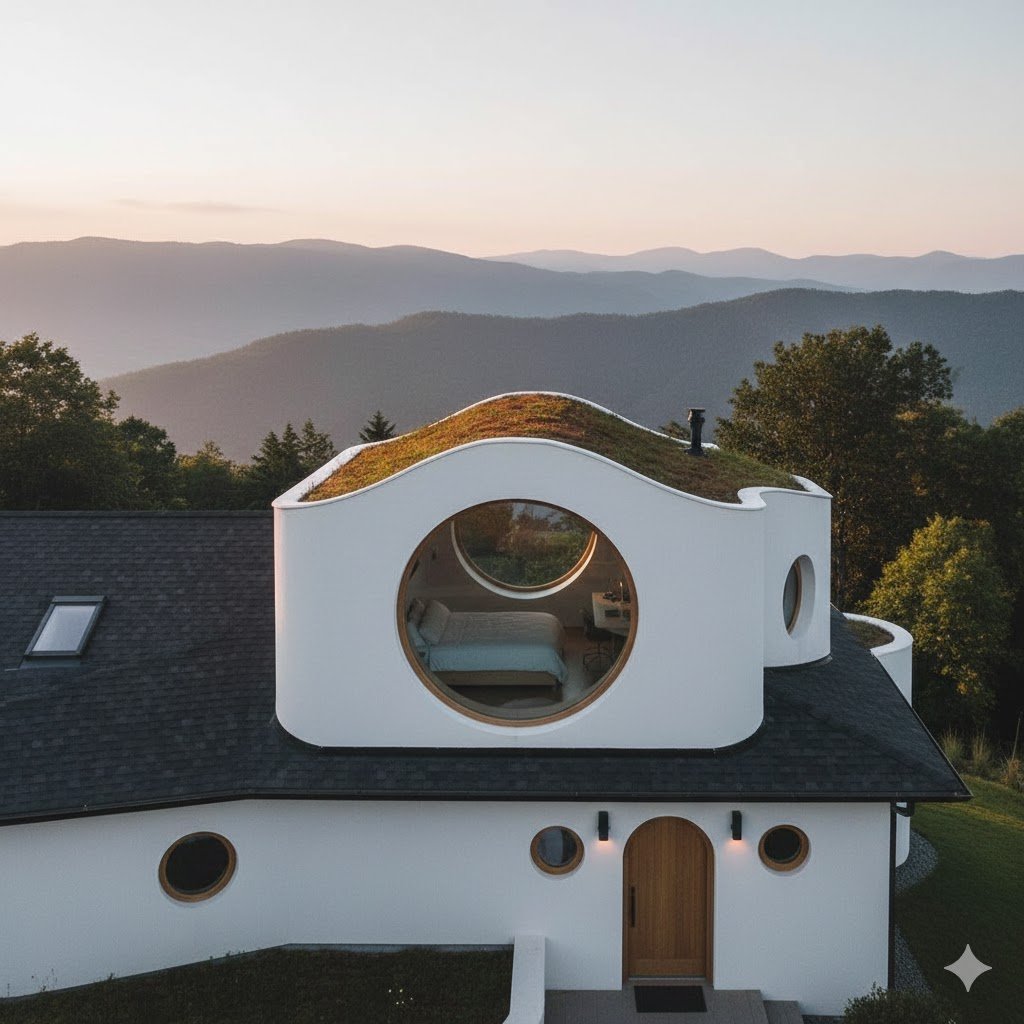
5. Mezzanine “Nests”
A wide-angle exterior view of a white, organic-shaped loft dormer extension on a dark-shingled roof. The dormer features a massive circular glass window that reveals a cozy bedroom inside. The top of the extension is covered in a lush green living roof, and the home is situated against a scenic backdrop of rolling mountains at sunset.

If you have high ceilings, a mezzanine level offers a creative vertical solution. Think of it as a “nest” overlooking the main living area—a semi-private space for work or relaxation that doesn’t expand the building’s footprint.
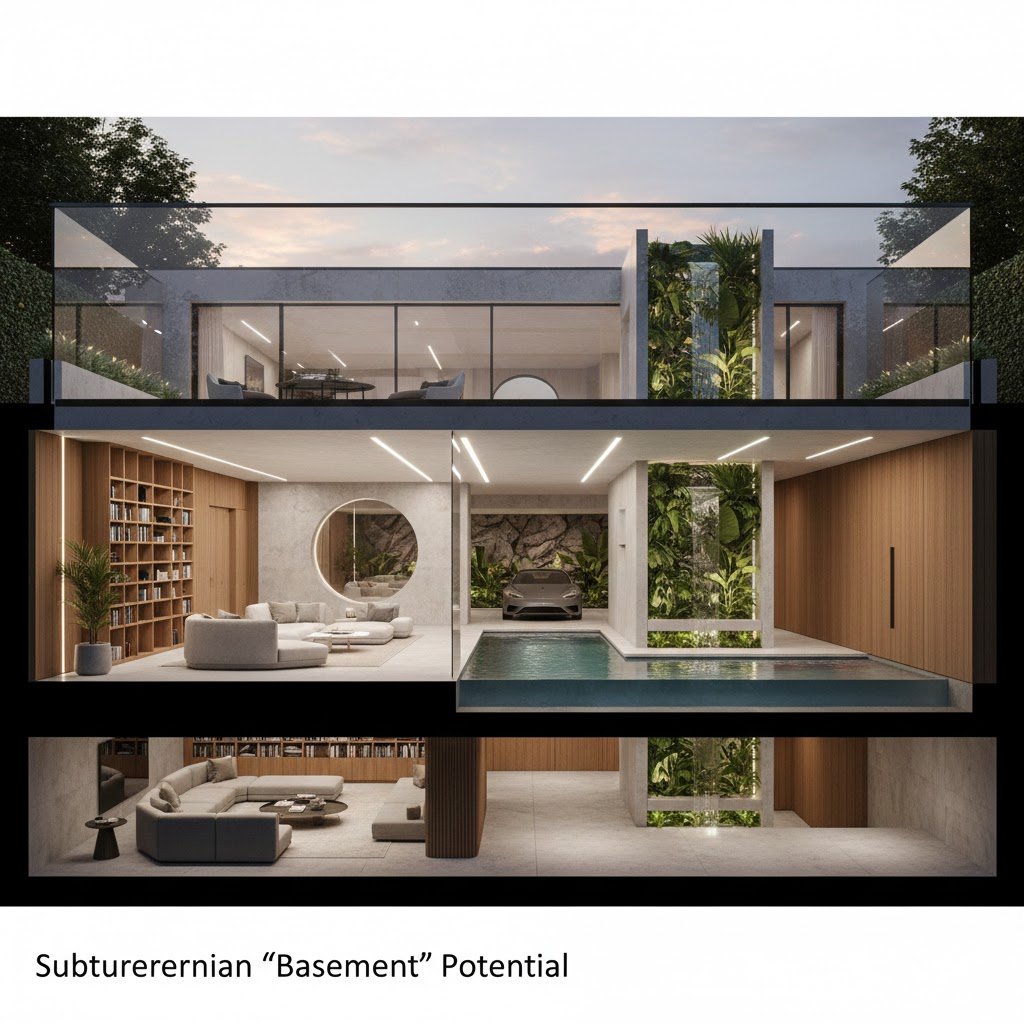
6. Subterranean “Basement” Potential
A detailed cross-section architectural render of a multi-level luxury home. The subterranean levels feature a sunken living room with organic curved furniture, a glass-walled indoor lap pool, an integrated car gallery, and a vertical living green wall with a waterfall that connects the underground spaces to the upper levels of the house.

Lowering a basement can create a home gym or studio. Following the principles of earth-sheltered architecture, these spaces stay naturally cool in the summer and warm in the winter by utilizing the earth’s thermal mass.
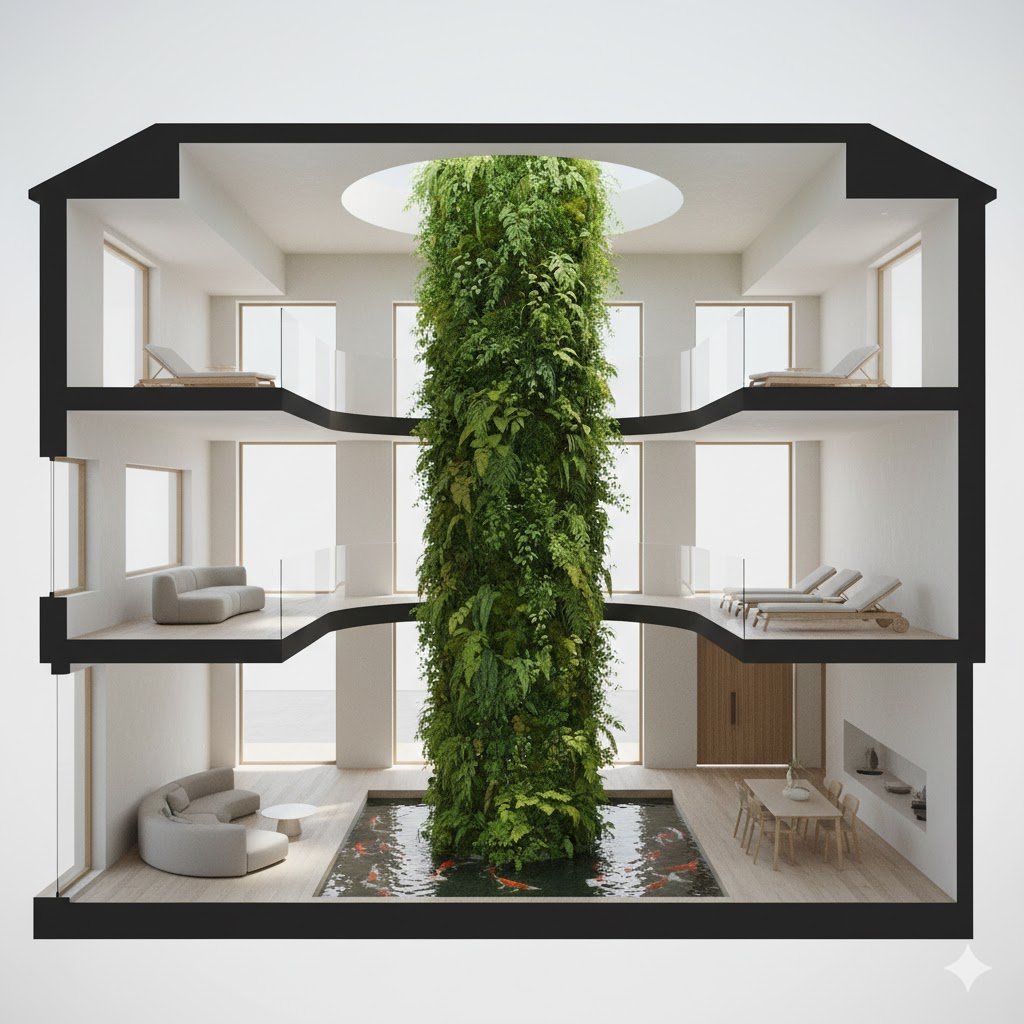
7. Lightwells & Biological Light
A multi-story architectural cross-section of a modern home centered around a massive vertical lightwell. A dense, lush pillar of greenery and ferns grows through the center of the house, illuminated by a circular skylight above. At the base, a serene koi pond reflects the light, while open-plan living and dining areas on multiple levels face the central organic garden.

One of the biggest complaints in homes is a lack of light. Integrating lightwells and skylights into an organic extension floods the space with “biological light,” which improves mood and reduces energy costs.

Visual Inspiration: Notice how circular skylights transform an interior into a bright, ethereal sanctuary.
8. Passive Solar & Sustainable Design
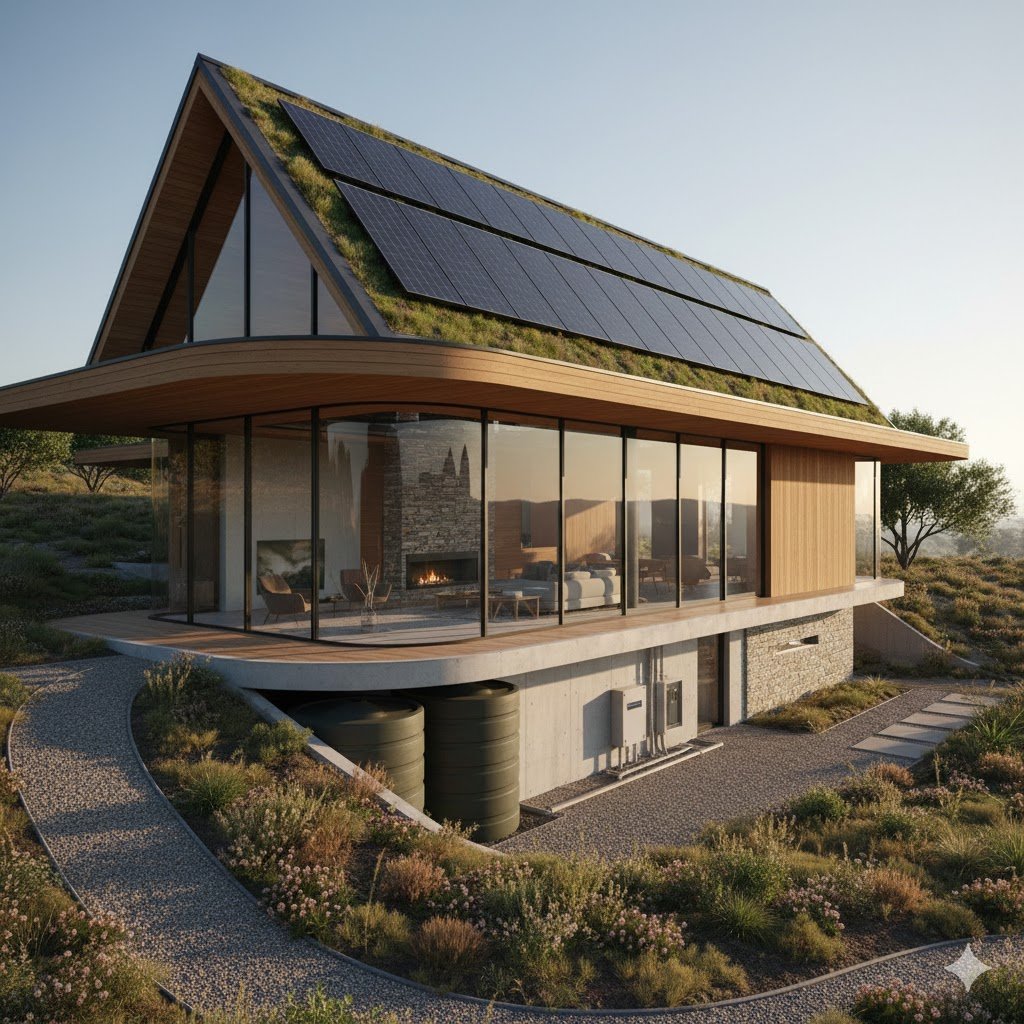
A modern eco-friendly house featuring a steep gabled roof equipped with both solar panels and a lush green living roof. The design includes large floor-to-ceiling glass walls for passive solar heating, a wood-cladded upper level, and a concrete foundation that houses visible rainwater collection tanks. The surrounding landscape is filled with native, drought-resistant plants.

Integrate sustainable elements like solar panels and passive solar design. By mimicking the “vaulted” structure of a mollusk, your extension becomes naturally more resilient to temperature fluctuations.
9. The Open-Plan “Chamber”
A modern eco-friendly house featuring a steep gabled roof equipped with both solar panels and a lush green living roof. The design includes large floor-to-ceiling glass walls for passive solar heating, a wood-cladded upper level, and a concrete foundation that houses visible rainwater collection tanks. The surrounding landscape is filled with native, drought-resistant plants.

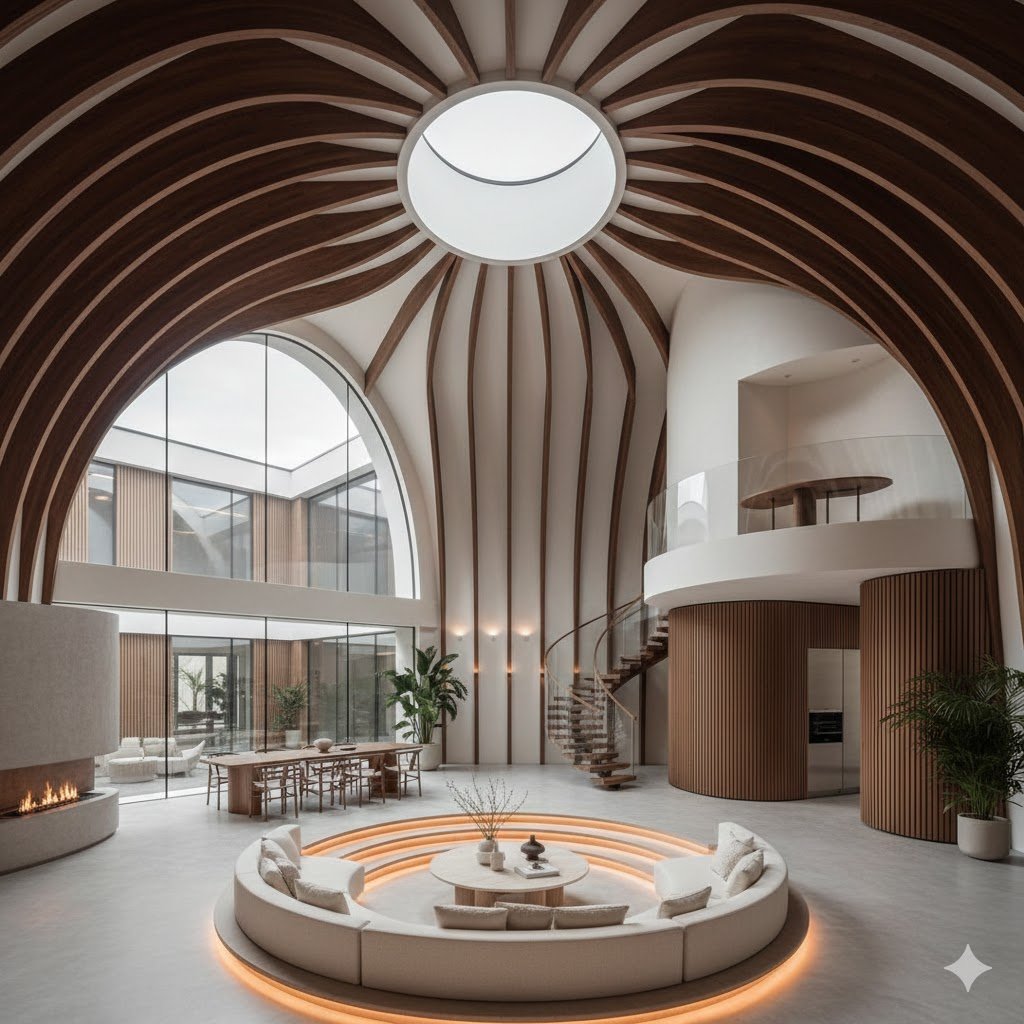
Modern homeowners prefer open-plan layouts that combine kitchen, dining, and living spaces. Organic extensions remove the “boxes-within-boxes” feel, creating a cohesive, fluid environment ideal for family life.


Planning Your Success

Before you break ground, keep these expert tips in mind:

  • Set a Realistic Budget: Always include a 10–20% contingency fund for the unexpected.

  • Evaluate Value: Ensure the extension adds both functional “joy” and long-term resale value.

  • Embrace the Curve: Even small details—like rounded corners or circular windows—can elevate a standard extension into a work of art.

Final Thoughts A well-designed home extension can completely transform your lifestyle. By looking “Beyond the Blueprint” and embracing the organic shapes found in nature, you create a home that doesn’t just house you—it sustains you.

Newsletter Updates

Enter your email address below and subscribe to our newsletter

Leave a Reply

Your email address will not be published. Required fields are marked *