Address
304 North Cardinal
St. Dorchester Center, MA 02124
Work Hours
Monday to Friday: 7AM - 7PM
Weekend: 10AM - 5PM
Address
304 North Cardinal
St. Dorchester Center, MA 02124
Work Hours
Monday to Friday: 7AM - 7PM
Weekend: 10AM - 5PM
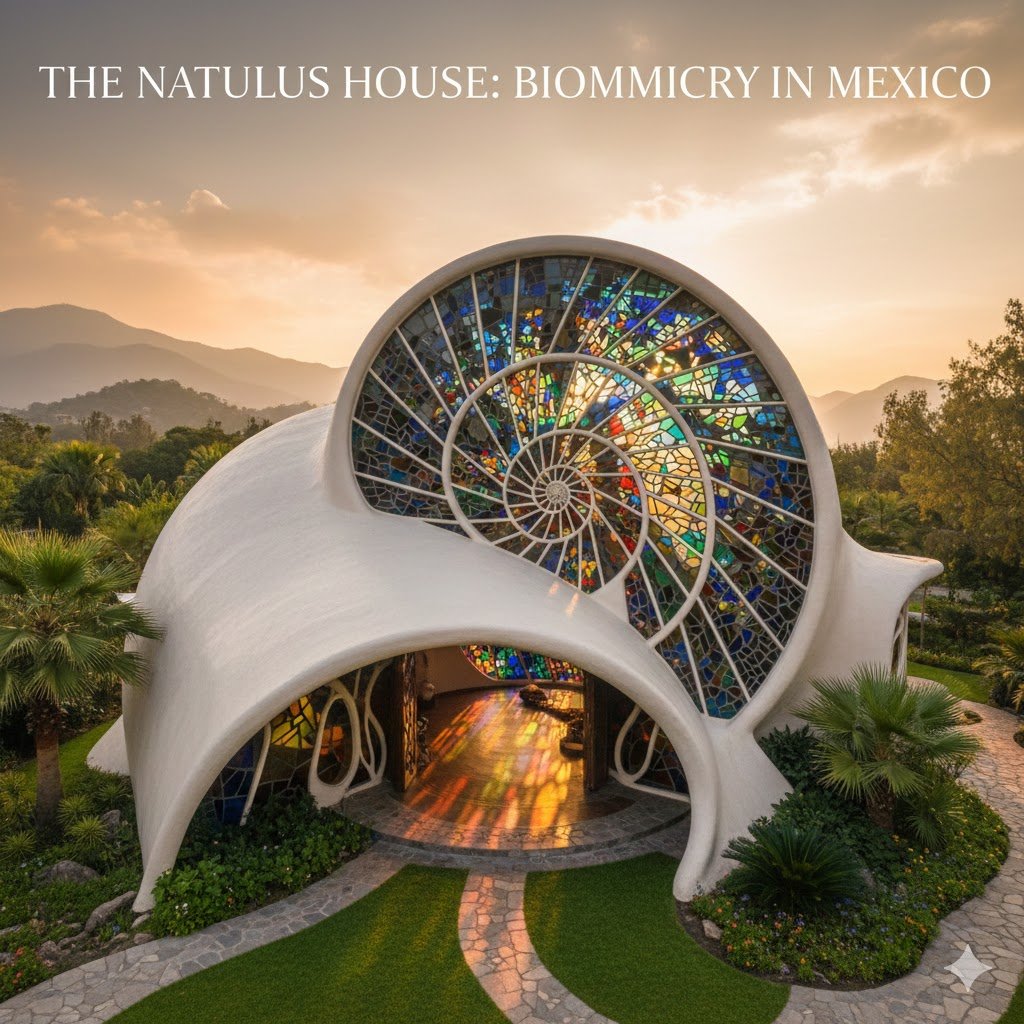
The Nautilus House is one of the most unique and eye-catching homes ever built. Inspired by the natural spiral of a seashell, this extraordinary house breaks away from traditional straight-line architecture and embraces curves, flow, and harmony with nature. Located in Mexico, the Nautilus House has become a global icon of organic architecture, attracting architects, designers, and home enthusiasts from around the world.
In this blog, we’ll explore what the Nautilus House is, its history, design concept, materials, interior layout, and why it continues to inspire modern architectural thinking.
The Nautilus House is a shell-shaped residential home designed to resemble the spiral form of a nautilus shell. Instead of sharp corners and box-like rooms, the house features smooth curves, flowing spaces, and a structure that feels almost alive.
This home is a perfect example of organic architecture, a design philosophy that draws inspiration from natural forms and aims to create harmony between humans and their environment.
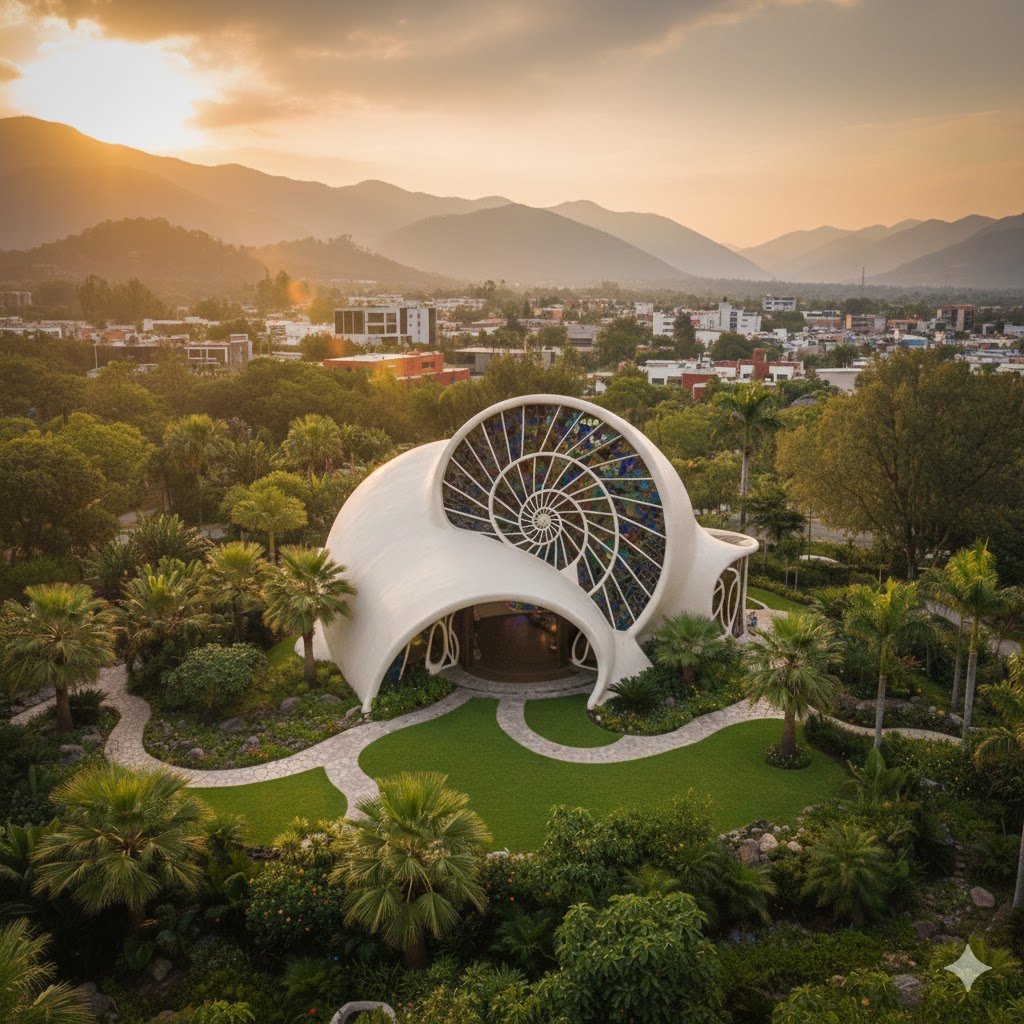
The Nautilus House is located in Naucalpan, near Mexico City, Mexico. It was completed in 2006 and built as a private residence for a family who wanted a home that felt more connected to nature rather than a conventional concrete building.
Despite being a private house, it gained international attention due to its unusual design and has since been featured in architecture magazines, documentaries, and design blogs worldwide.
The Nautilus House was designed by Javier Senosiain, a well-known Mexican architect famous for his work in organic and bio-architecture.
About Javier Senosiain
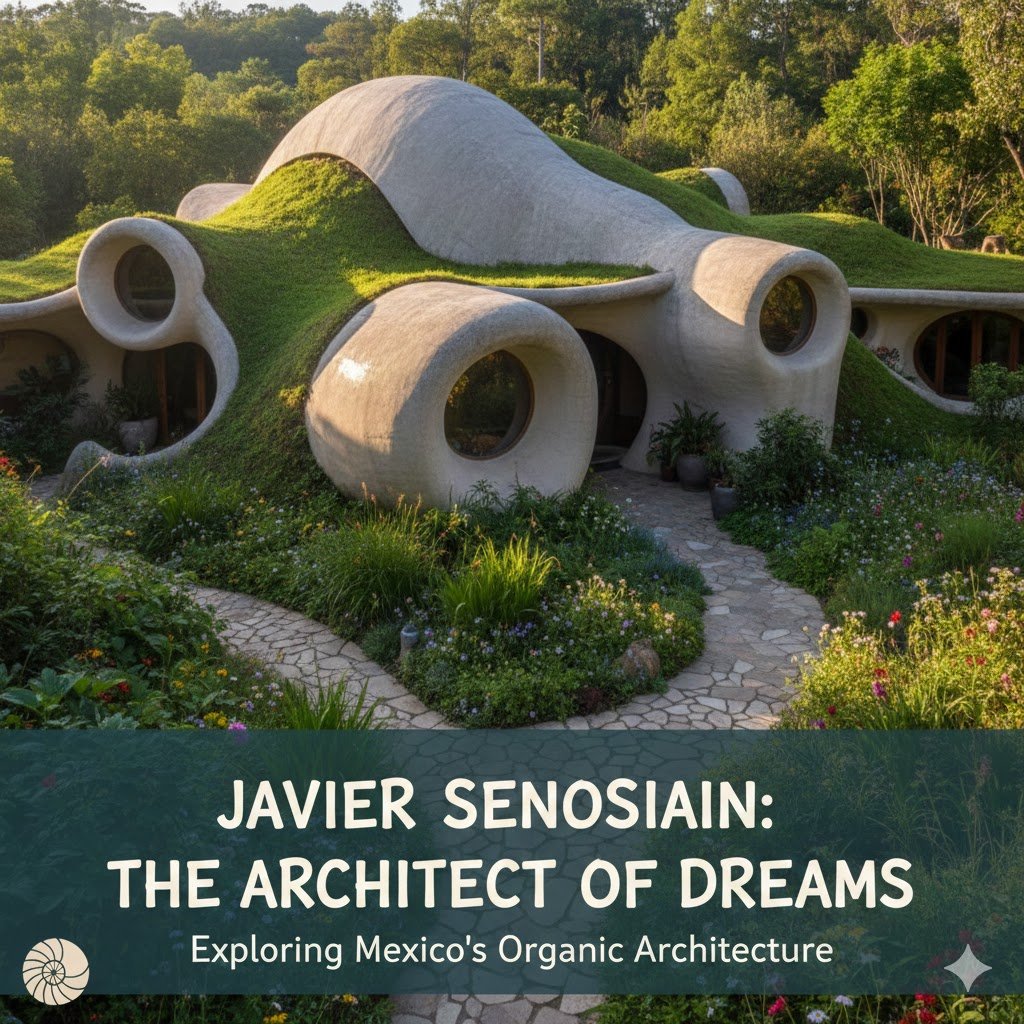
Pioneer of organic architecture in Mexico
Inspired by natural forms like animals, caves, shells, and plants
Focuses on creating homes that feel comfortable, emotional, and human-centric
Senosiain believes that curved spaces feel more natural and psychologically comforting than rigid, box-shaped rooms — a philosophy clearly reflected in the Nautilus House.
Shell-Inspired Exterior Design
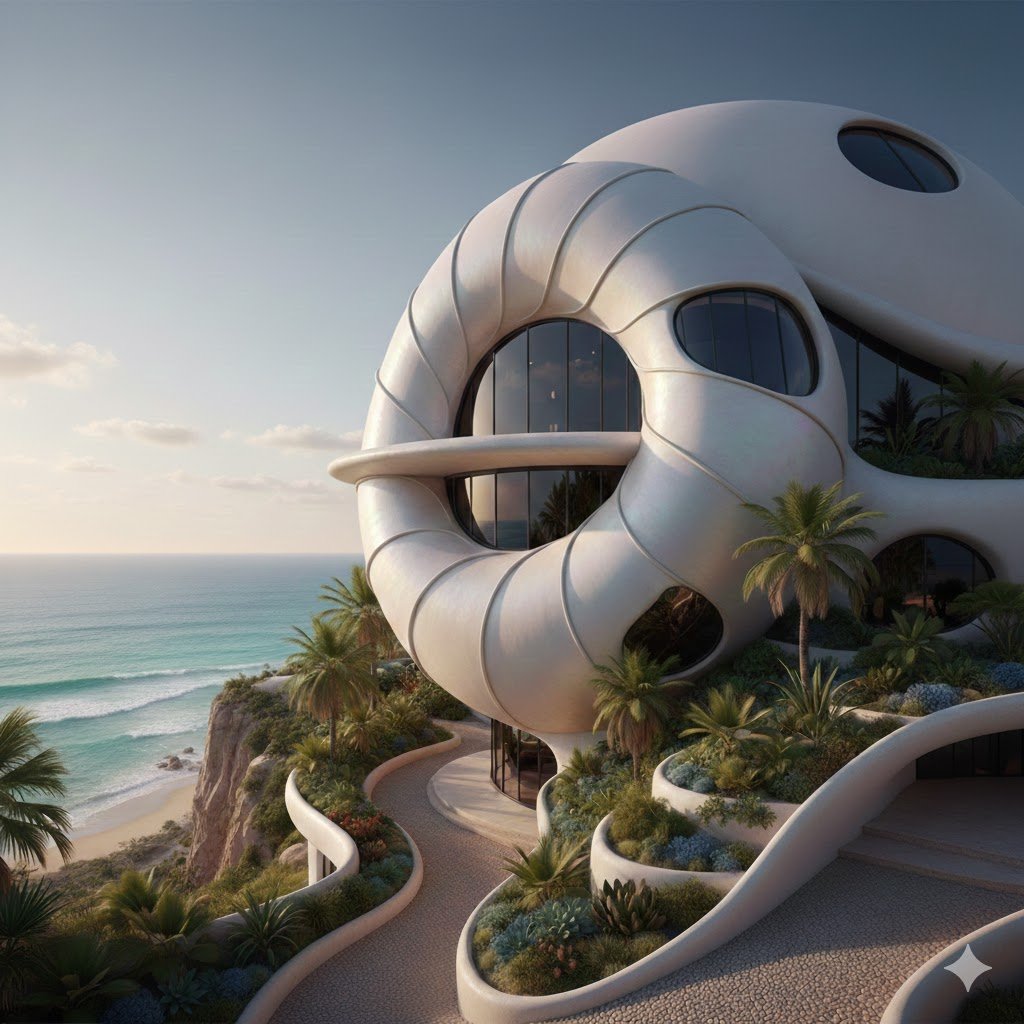
The most striking feature of the Nautilus House is its giant shell-like exterior. From the outside, the house looks like a massive nautilus shell emerging from the ground.
Key exterior features include:
Smooth spiral shape
Earth-toned colors that blend with the surroundings
No sharp edges or straight walls
Natural integration with the landscape
The design makes the house appear as though it grew naturally from the earth.
Stepping inside the Nautilus House feels like entering a completely different world.
Key Interior Features:
Flowing, open spaces instead of closed rooms
Curved walls and ceilings
Spiral staircases
Stained glass windows that create colorful light patterns
Seamless transitions between living areas
There are no traditional rectangular rooms. Each space flows into the next, creating a continuous and organic living experience.
The Nautilus House is not just visually unique — it is also technically innovative.
Steel-reinforced wire mesh
Ferrocement (a thin concrete mixture)
Natural finishes for interior surfaces
Allow smooth curves and complex shapes
Strong and durable
Lightweight compared to traditional concrete
Earthquake-resistant (important in Mexico)
These materials made it possible to turn a complex organic form into a safe, livable home.
The Nautilus House gained global recognition for several reasons:
Unique organic architecture
Nature-inspired shell design
Alternative to box-shaped modern homes
Artistic and sculptural appearance
Psychological comfort through curves
It challenges the idea that homes must be rigid, square, and uniform.
1. Strong Connection With Nature
Living in the Nautilus House feels like living inside a natural form rather than a man-made structure.
2. Psychological Comfort
Curved spaces are known to feel more calming and welcoming compared to sharp corners.
3. Energy Efficiency
The structure helps regulate temperature naturally due to its shape and materials.
4. Unique Living Experience
No two spaces feel the same, making daily life more engaging and inspiring.
While the Nautilus House is stunning, it also comes with challenges.
1. High Construction Cost
Custom designs and specialized materials increase costs.
2. Not Easy to Furnish
Standard furniture doesn’t always fit curved walls.
3. Limited Replication
This type of design is difficult to mass-produce.
Despite these challenges, many believe the benefits outweigh the drawbacks.
The Nautilus House is a landmark example of organic architecture, a movement promoted by architects like Frank Lloyd Wright and further developed by designers like Javier Senosiain.
Inspired by nature
Harmony between building and environment
Human comfort as a priority
Fluid, natural forms
The Nautilus House perfectly embodies these principles.
The Nautilus House is a private residence, so it is not generally open to the public. However, it is often studied through photographs, videos, and architectural case studies.
Architecture students and designers frequently analyze the house as a model of bio-architecture and creative freedom.
Think beyond straight lines
Design with human emotions in mind
Use nature as a design guide
Balance creativity with functionality
Explore sustainable and natural forms
The Nautilus House proves that architecture can be both functional and poetic.
What is the Nautilus House?
The Nautilus House is a shell-shaped organic home in Mexico inspired by the natural form of a nautilus shell.
Who designed the Nautilus House?
It was designed by Mexican architect Javier Senosiain.
Where is the Nautilus House located?
It is located in Naucalpan, near Mexico City, Mexico.
Is the Nautilus House eco-friendly?
Yes, its design promotes natural lighting, airflow, and energy efficiency.
Can people live comfortably in the Nautilus House?
Yes, it is a fully functional home designed for everyday living.
The Nautilus House is more than just a home — it is a masterpiece of organic architecture that redefines how we think about living spaces. By drawing inspiration from nature, architect Javier Senosiain created a house that feels alive, emotional, and deeply human.
In a world filled with repetitive concrete boxes, the Nautilus House stands as a reminder that architecture can be creative, sustainable, and soulful. It continues to inspire architects and homeowners to imagine homes that truly connect us with nature.