Address
304 North Cardinal
St. Dorchester Center, MA 02124
Work Hours
Monday to Friday: 7AM - 7PM
Weekend: 10AM - 5PM
Address
304 North Cardinal
St. Dorchester Center, MA 02124
Work Hours
Monday to Friday: 7AM - 7PM
Weekend: 10AM - 5PM
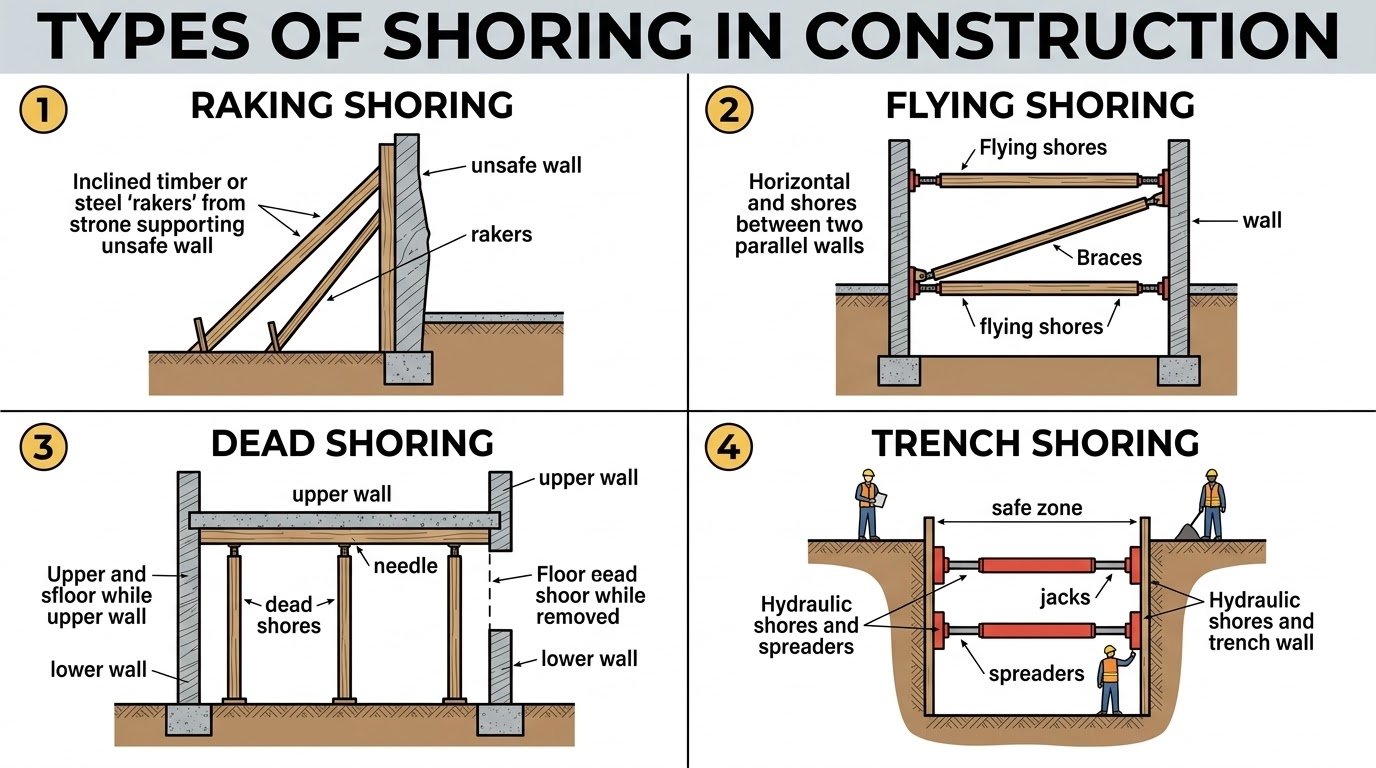
Construction projects often involve excavations, structural repairs, or modifications that can weaken the stability of a building or surrounding soil. In such situations, temporary structural support systems are necessary to prevent collapse and ensure worker safety. One of the most important safety solutions used in construction is shoring.
Shoring provides temporary support to structures, walls, or trenches during construction activities. Without proper shoring systems, buildings under repair or deep excavations can become unstable and dangerous. For this reason, engineers carefully design and install shoring systems to protect workers, equipment, and nearby structures.
In this comprehensive guide, we will explore what shoring is, why it is important, and the different types of shoring used in construction projects.
Shoring is a temporary support system used to stabilize structures or excavations during construction, repair, or demolition. These supports help maintain structural integrity until permanent elements like beams, columns, or foundations are installed.
Shoring systems are commonly used when:
Walls become unstable during renovations
Foundations are being repaired or replaced
Excavation work weakens surrounding soil
Structural components are removed temporarily
By distributing loads safely and preventing structural movement, shoring ensures that construction work can proceed safely and efficiently.
Shoring plays a crucial role in modern construction safety and engineering. Properly designed shoring systems help prevent accidents and protect structural stability.
When a building or wall becomes unstable during construction work, shoring supports the structure and prevents failure.
Temporary support systems reduce the risk of injuries caused by falling walls, collapsing trenches, or unstable structures.
Deep excavation projects require shoring to prevent soil movement and trench collapse.
In urban areas, construction activities may affect neighboring structures. Shoring helps maintain their stability.
Different construction conditions require different shoring systems. Engineers choose the most suitable method based on structural load, soil condition, and site constraints.
Below are the most common types of shoring used in construction projects.
Raking shoring is used when a wall becomes weak or unstable and requires lateral support. In this system, inclined supports called rakers are placed against the wall and connected to the ground.
The rakers transfer the structural load from the wall to the ground at an angle, stabilizing the structure.
Key Characteristics
Inclined supports positioned against walls
Typically placed at an angle of 60° to 75°
Supported with wall plates and sole plates
Common Uses
Stabilizing damaged buildings
Repairing cracked or leaning walls
Renovation of historic structures
Raking shoring is one of the most widely used methods because it is relatively simple and effective.
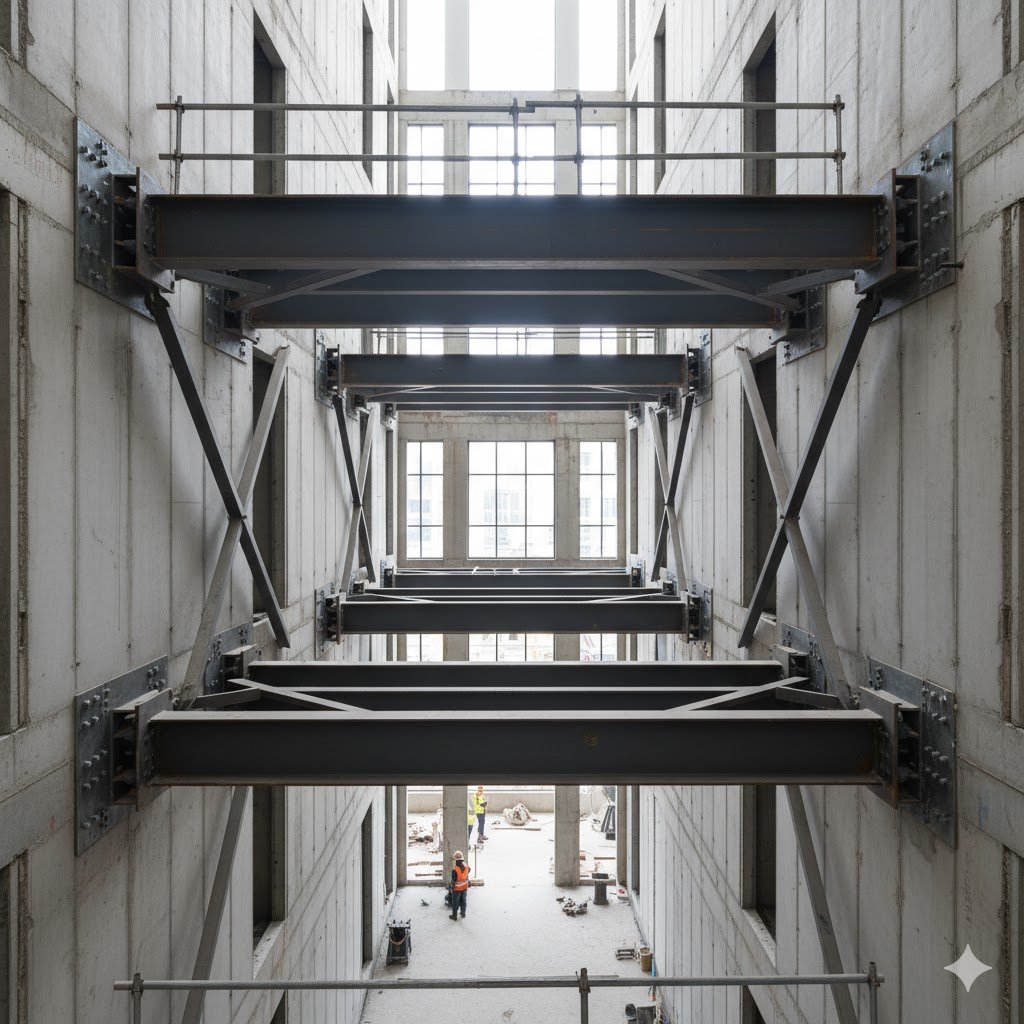
Flying shoring is used when two parallel walls need support but there is no space available for ground-based supports. In this method, horizontal structural members connect the walls of two adjacent buildings.
These horizontal supports transfer loads between structures, stabilizing both walls.
Key Characteristics
No ground-based supports
Uses horizontal braces and struts
Ideal for tight construction spaces
Common Uses
Demolition of adjacent buildings
Supporting neighboring walls
Urban construction projects
Flying shoring is especially useful in densely built areas where ground space is limited.
Dead shoring is used when a structural element such as a wall, column, or foundation must be removed or repaired. In this method, vertical supports called dead shores are placed beneath the structure to carry the load.
These supports temporarily transfer the building’s weight to the ground.
Key Characteristics
Vertical props support structural loads
Used when load-bearing elements are removed
Provides strong temporary support
Common Uses
Removing load-bearing walls
Foundation reconstruction
Beam or column replacement
Dead shoring is essential during structural alterations to prevent collapse.
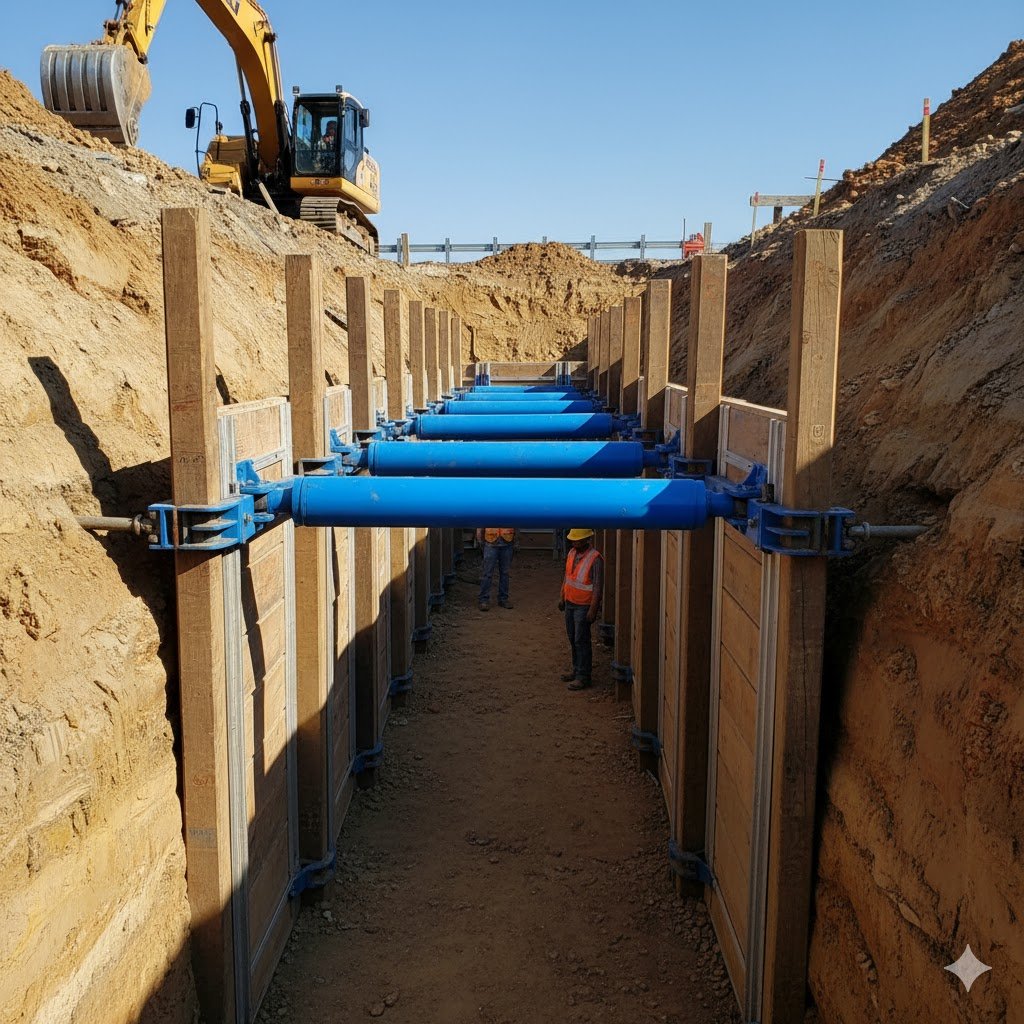
Hydraulic shoring uses hydraulic pistons to provide adjustable pressure support for trenches and excavations. This modern system allows fast installation and removal.
Hydraulic shoring is commonly used in utility work, pipeline installation, and trench construction.
Key Characteristics
Adjustable hydraulic pressure
Lightweight aluminum or steel components
Quick installation and removal
Common Uses
Trench excavation
Utility line installation
Sewer or pipeline construction
Because of its speed and efficiency, hydraulic shoring is widely used in modern construction projects.
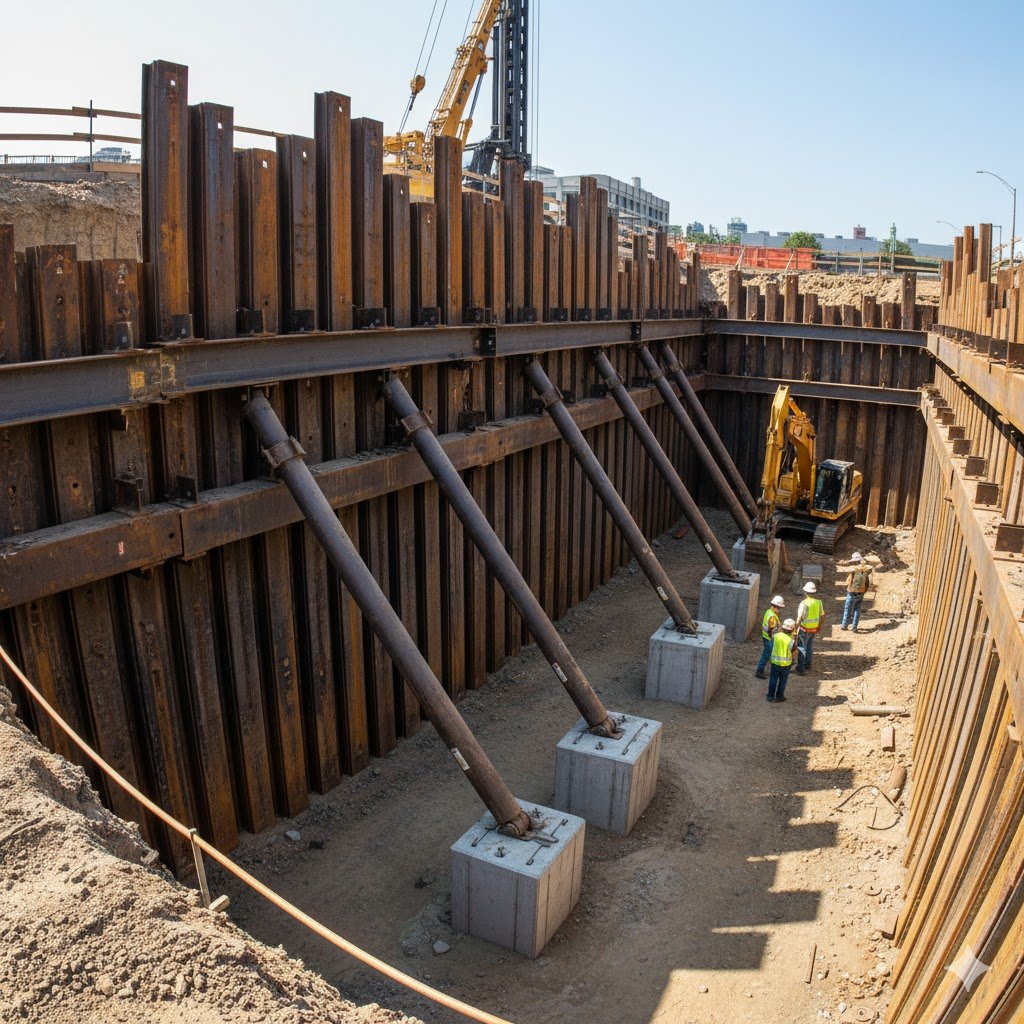
Sheet pile shoring involves driving large interlocking sheets of steel, vinyl, or wood into the ground to create a strong retaining wall.
This method is particularly effective in areas with loose soil or high groundwater levels.
Key Characteristics
Continuous retaining wall system
Strong resistance to soil and water pressure
Suitable for deep excavations
Common Uses
Bridge foundations
Waterfront construction
Underground basements
Sheet pile shoring is commonly used in large infrastructure and marine projects.
This method creates a flexible retaining wall that supports surrounding soil.
Key Characteristics
Strong and durable excavation support
Cost-effective for urban construction
Suitable for deep foundation work
Common Uses
Basement construction
Underground parking structures
Urban excavation projects
This system is commonly used in modern city infrastructure projects.
Choosing the right shoring method depends on several engineering and environmental factors.
Loose or sandy soil requires stronger support systems than compact soil.
Deeper excavations demand stronger shoring structures.
The weight of buildings and materials influences shoring design.
Urban areas may restrict certain types of shoring systems.
Short-term projects may use temporary or lightweight shoring solutions.
Proper engineering analysis ensures that the selected shoring method meets safety requirements.
Safety is the most critical factor when installing shoring systems. Construction teams should follow strict safety guidelines, including:
Conducting detailed site inspections before installation
Using engineer-approved designs
Inspecting shoring systems regularly
Training workers on safety procedures
Monitoring structural movement during construction
These safety measures help prevent accidents and structural failures.
Shoring plays a vital role in maintaining safety and stability during construction projects. By providing temporary structural support, shoring systems prevent collapses, protect workers, and ensure smooth project execution.
Understanding the different types of shoring—such as raking shoring, flying shoring, dead shoring, hydraulic shoring, sheet pile shoring, and soldier pile systems— helps engineers and construction professionals choose the most suitable solution for each project.
As construction projects become larger and more complex, properly designed shoring systems remain essential for ensuring structural safety and successful project completion.