Address
304 North Cardinal
St. Dorchester Center, MA 02124
Work Hours
Monday to Friday: 7AM - 7PM
Weekend: 10AM - 5PM
Address
304 North Cardinal
St. Dorchester Center, MA 02124
Work Hours
Monday to Friday: 7AM - 7PM
Weekend: 10AM - 5PM
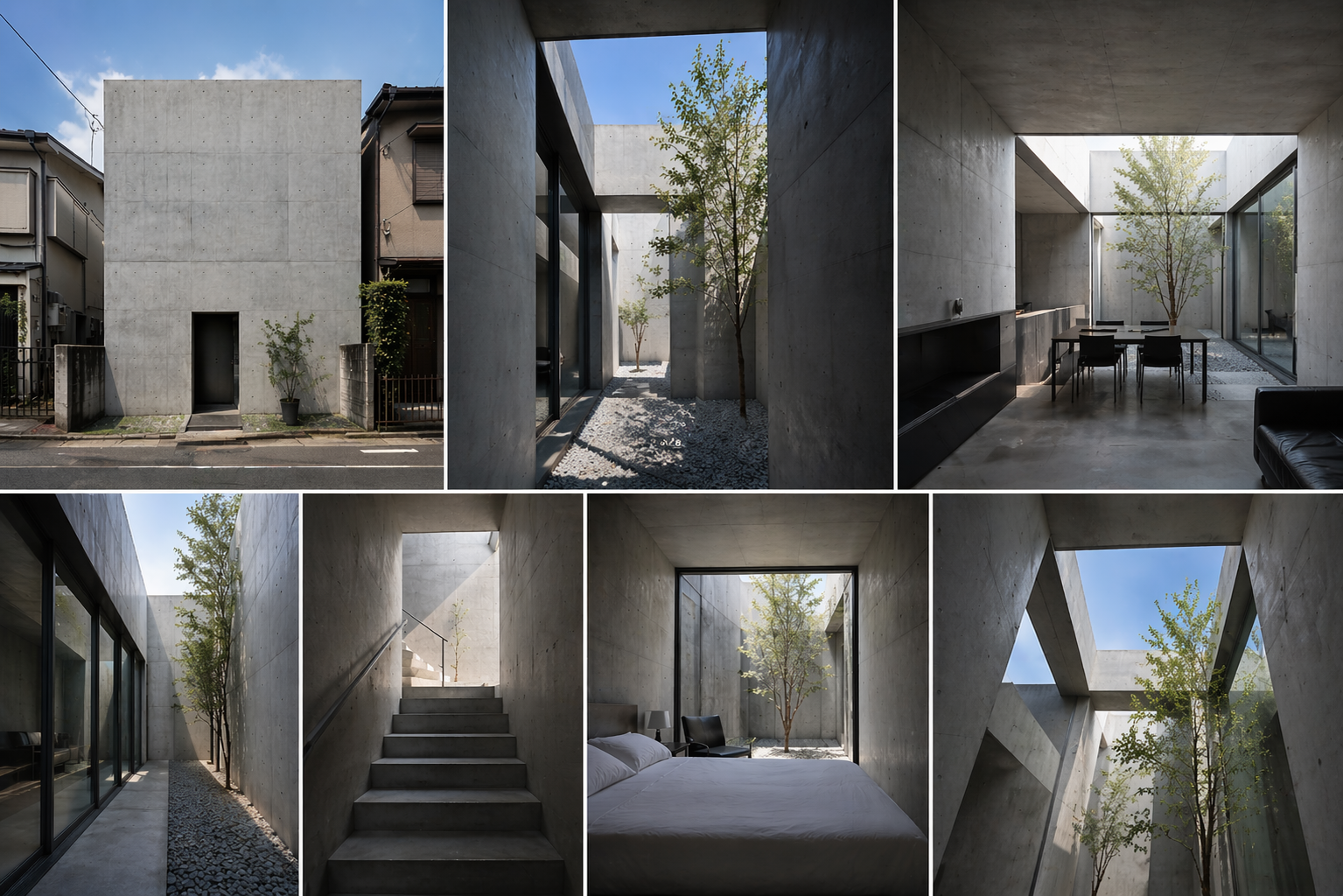
The Row House by Tadao Ando, also known as the Azuma House, is one of the most iconic examples of modern Japanese architecture. Built in Osaka in 1976, this minimalist concrete home redefined urban living by prioritizing light, space, and human experience over conventional comfort.
In this blog, we explore how the Azuma House uses raw concrete, spatial design, and natural elements to create a deeply philosophical living environment.
The Azuma House (Row House in Sumiyoshi) is a small residential project designed by Tadao Ando, one of the most influential architects in contemporary design.
Despite its compact size, the house became a global reference for minimalist architecture and urban residential design.
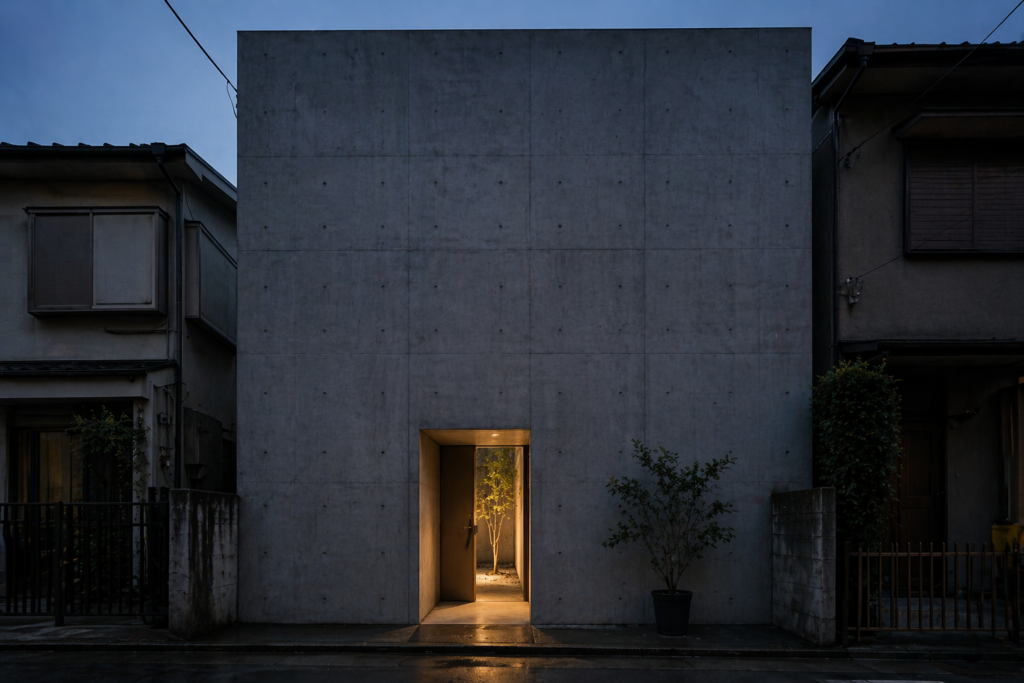
Unlike traditional homes, the Azuma House presents a windowless concrete façade to the street. This bold design creates a private, inward-looking sanctuary within a dense urban environment.
This approach reflects Ando’s philosophy of designing spaces that encourage reflection and inner calm.
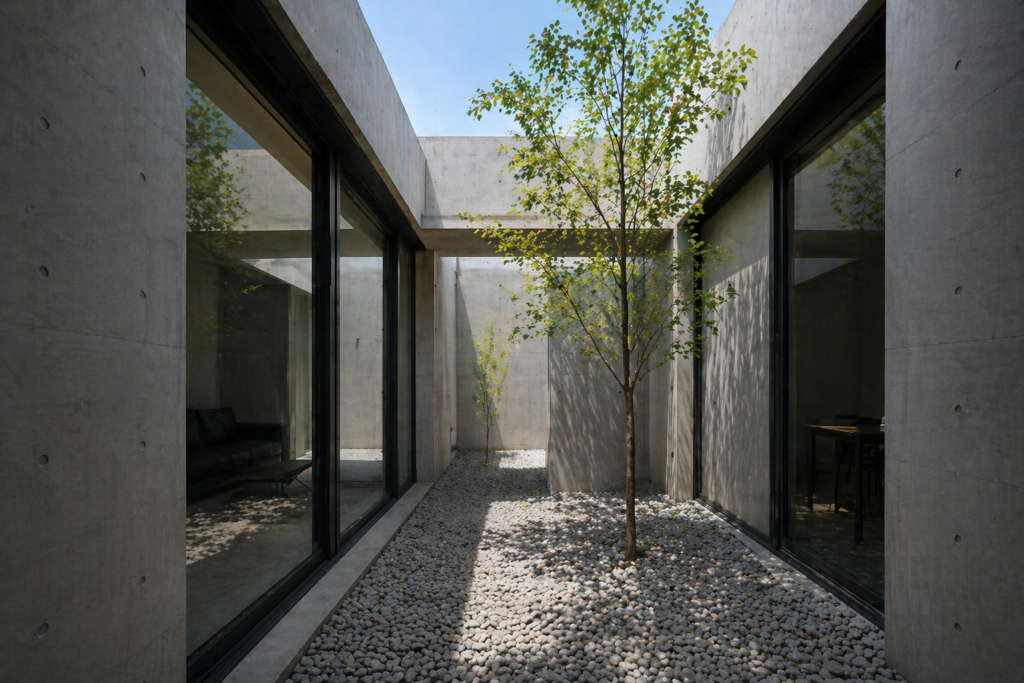
One of the most important features of the Row House is its open-air central courtyard.
The layout forces residents to walk through the courtyard to move between rooms, meaning they directly experience rain, sunlight, and wind.
The house is divided into three simple sections:
This linear arrangement emphasizes function, movement, and spatial clarity.
This makes the Azuma House a perfect example of minimalist home design.
Concrete plays a central role in defining the character of the house.
Unlike traditional Brutalist structures, Ando’s concrete feels refined, smooth, and intentional.
Living in the Azuma House is intentionally unconventional.
This makes the house more than a residence—it becomes a daily experience shaped by architecture.
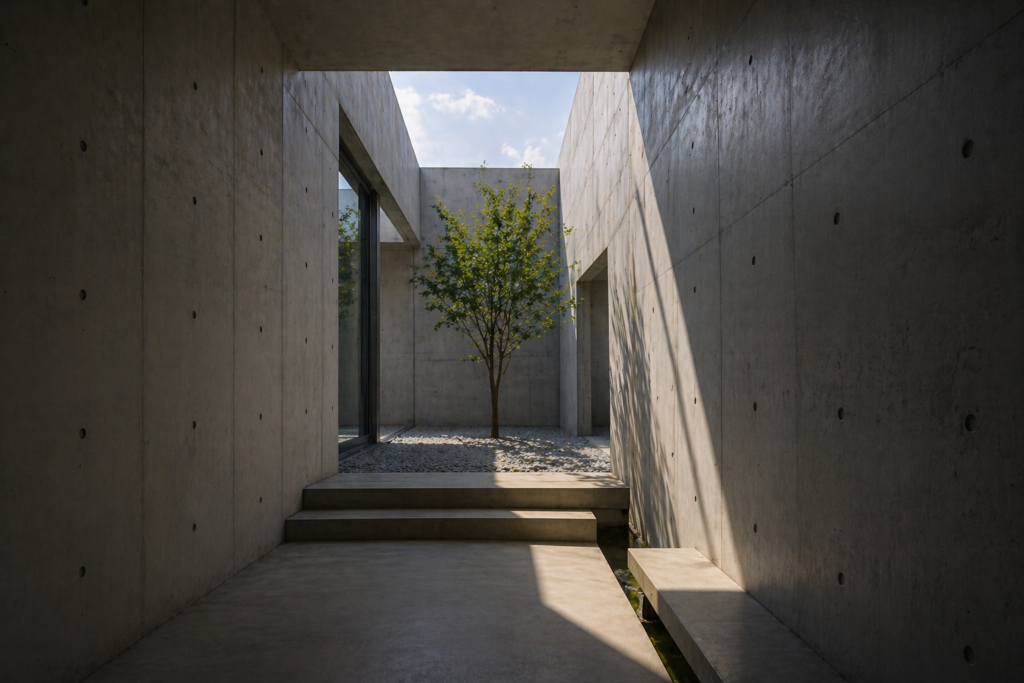
The Azuma House reflects the core philosophy of Tadao Ando:
“Architecture should remain silent and let nature speak.”
Key ideas:
These principles have influenced modern architecture worldwide.
The Row House in Sumiyoshi is considered a landmark because it:
It also helped establish Ando as a global figure, eventually earning him the Pritzker Architecture Prize.
The Azuma House is not just a building—it’s a philosophical statement about living.
By combining light, concrete, and space, Tadao Ando created a home that challenges modern ideas of comfort and convenience.
Instead of making life easier, the house makes life more intentional, aware, and meaningful.