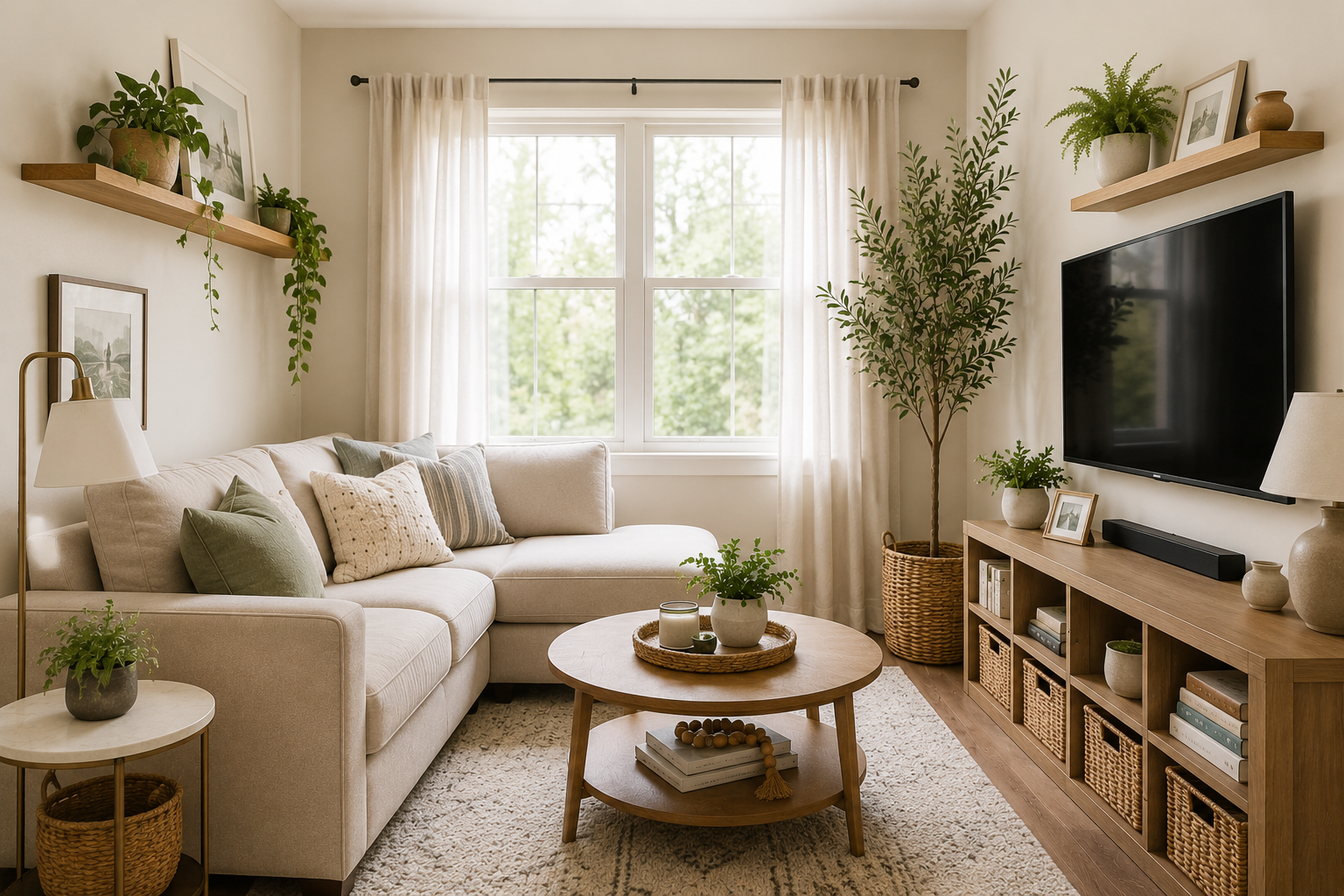
Small Living Room Ideas That Actually Work (Budget-Friendly + DIY Tips)

Let’s be real — a small living room isn’t a design flaw. It’s a design challenge. And honestly? Some of the coziest, most beautiful living rooms in the world are compact ones. The trick isn’t to make it look bigger (though we’ll cover that too). The trick is to make it work better.

Whether you’re renting a studio apartment, decorating a starter home, or just dealing with a room that feels more cramped than cozy, this guide is for you. No expensive renovations. No interior designer on retainer. Just smart, doable ideas — many of them DIY — that genuinely transform how a small living room looks and feels.

Why Small Living Rooms Are Actually an Advantage

Before diving into the tips, let’s reframe the situation.

Small rooms are easier to keep warm, cheaper to furnish, faster to clean, and — if done right — feel far more intimate and inviting than oversized spaces with too much empty floor. Some of the most iconic home interiors in design history have been small. Think Parisian studio apartments. Japanese “wabi-sabi” living spaces. New York City lofts.

The goal isn’t to trick the eye into thinking you live in a mansion. The goal is to create a room that feels intentional, comfortable, and entirely yours — within the space you have.

With that mindset in place, let’s get into it.

1. Ditch the Oversized Sofa (Yes, Really)

The single biggest mistake people make in small living rooms is buying a sofa that’s too large. A massive sectional might look incredible in the showroom, but in a 12×14 foot living room, it eats the entire space.

What to do instead:

  • Go for a sofa in the 72–84 inch range rather than 90+ inches
  • Choose sofas with exposed legs — they create visual breathing room underneath
  • Consider a loveseat + armchair combo instead of a traditional three-seater sofa
  • Look for “apartment sofas” — a real product category designed for tighter spaces

Budget tip: IKEA’s KIVIK and ÄPPLARYD lines, or second-hand finds on Facebook Marketplace, regularly offer compact sofas under $400. A good slipcover can make a $60 thrifted sofa look like a $600 piece.

2. Use Furniture That Does Double Duty

In a small living room, every piece of furniture needs to earn its place. If it only does one thing, think hard about whether it needs to be there.

The best multi-use furniture for small living rooms:

  • Ottoman with storage: Use it as a coffee table, extra seating, and a storage chest all at once. A tray on top transforms it into a stable surface.
  • Sofa with built-in storage: Some sofas have lift-up bases or side arm storage. Invaluable in small spaces.
  • Nesting tables: Two or three small tables that slide under each other. Pull them out when you have guests, tuck them away when you don’t.
  • Fold-down desk shelf: If your living room doubles as a workspace, a wall-mounted fold-down desk takes zero floor space when not in use.
  • Daybed or sleeper sofa: If you occasionally host overnight guests, this is smarter than a dedicated guest room.

DIY idea: Build a simple storage ottoman using a wooden crate, foam cushion, and fabric. Total cost: under $40. Instructions are everywhere on YouTube and Pinterest — it’s one of the most beginner-friendly DIY furniture projects there is.

3. Think Vertical — Your Walls Are Untapped Real Estate

Floor space is limited. Wall space usually isn’t. The most effective small living room transformations move storage and visual interest up.

Vertical strategies that work:

  • Floor-to-ceiling shelving: This draws the eye upward, making ceilings feel higher. IKEA’s BILLY bookcase can be modified with extensions to reach most standard ceiling heights.
  • Floating shelves above the sofa: Adds storage and style without taking any floor space at all.
  • Tall, narrow furniture: A tall bookcase or slim wardrobe takes a smaller footprint than a wide, squat media console.
  • Hang curtains high: Mount curtain rods as close to the ceiling as possible, and let the drapes fall all the way to the floor. This is one of the cheapest tricks in interior design for making a room feel taller and more expansive.

DIY idea: A custom floating shelf is about as beginner-DIY as it gets. A plank of pine or oak from the hardware store, a few floating brackets, a drill and a level — you’re looking at an afternoon project and under $30.

4. Mirrors: The Classic Trick That Still Works

Yes, every design guide mentions mirrors. That’s because they genuinely work. A well-placed mirror can make a small living room feel dramatically larger by bouncing light and creating the illusion of depth.

How to use mirrors effectively:

  • Place a large mirror on the wall opposite a window to reflect natural light back into the room
  • A gallery wall of smaller mirrors can work just as well as one large piece
  • Mirrored furniture (coffee tables, side tables) adds the same effect in a more subtle way
  • Don’t place mirrors where they’ll reflect clutter — they amplify everything, good and bad

Budget tip: Large decorative mirrors at discount home stores (TJ Maxx, HomeGoods, World Market) are often a fraction of the price of similar styles at furniture retailers. Thrift stores and estate sales are goldmines too.

5. Choose the Right Rug — and Size Matters More Than You Think

Rugs define zones in a living room. In a small space, the wrong rug size is one of the most common design mistakes — and one of the easiest to fix.

The rule: In most living rooms, you want the front legs of your sofa and chairs to sit on the rug, not floating beside it. A rug that’s too small makes the room feel disconnected and actually shrinks the visual space.

For small living rooms:

  • An 8×10 is the most versatile size for small to medium rooms
  • If budget is tight, a 5×8 can work — but push the furniture close to the edges
  • Avoid anything smaller than 5×7 unless it’s a defined accent area

Color and pattern tips:

  • Light, solid rugs open up the room visually
  • Low-pile or flat-weave rugs work better in tight spaces than thick shag styles
  • A subtle pattern (geometric, tonal) adds interest without overwhelming

Budget tip: Ruggable and Wayfair regularly have sales. For a truly budget option, outdoor rugs (especially from Target’s seasonal section) are durable, stylish, and often priced under $60.

6. Control the Clutter (Aggressively)

No design trick in the world will make a cluttered small living room feel good. Clutter is the enemy of small spaces, full stop.

This doesn’t mean going full minimalist if that’s not your style. It means being intentional about what stays.

Practical clutter-control strategies:

  • The “one in, one out” rule: every time something new comes in, something goes out
  • Hidden storage for remote controls, charging cables, and everyday items (a pretty basket or box works perfectly)
  • Built-in shelving keeps things off the floor
  • A consistent color palette for visible items (throw blankets, pillows, books) makes even a full room feel curated rather than chaotic
  • Digital frames or floating shelves replace mantle-style displays that collect knick-knacks

DIY idea: Rope baskets are easy to make and cost about $10 in materials. They’re functional (hidden storage), decorative, and endlessly customizable. A simple tutorial takes about an hour for a beginner.

7. Get Strategic With Lighting

Overhead lighting alone flattens a room and makes it feel smaller. Layered lighting — ambient, task, and accent — makes any room feel larger, warmer, and more dynamic. In a small living room, it’s especially powerful.

Lighting layers to include:

  • Ambient (overhead): If you’re stuck with a single ceiling fixture, swap the bulb for a warm-toned LED (2700K–3000K). Instant improvement.
  • Floor lamp: A slender arc lamp or torchiere adds height without taking much floor space
  • Table lamps: One on each side of the sofa creates symmetry and warmth
  • Accent lighting: LED strip lights behind the TV or under shelves add depth and dimension

Budget tip: Plug-in sconces (no electrician needed) are a great alternative to wall-mounted fixtures. IKEA’s HEKTAR lamp and similar styles start under $30.

8. Color: Light Doesn’t Always Mean Bigger

The default advice for small rooms is “paint everything white or cream.” And while light colors do open up a space, it’s not the only option — and it’s not always the most interesting one.

What actually works:

  • Light, warm neutrals: Creamy whites, warm beiges, and greige tones (grey-beige) are more forgiving and liveable than cool stark whites
  • One accent wall in a deeper tone: A single wall in sage green, dusty navy, or terracotta can add depth without closing in the space
  • Monochromatic rooms: Choosing a single color in varying tones (walls, furniture, textiles) creates a cohesive look that actually feels more spacious than clashing colors
  • Dark and cozy: Some small living rooms look incredible in deep, moody tones — forest green, slate blue, charcoal. It creates a cocoon effect. If you lean into it, lean all the way in.

Budget tip: One litre of paint covers about 12–15 square metres. You probably don’t need more than one litre for an accent wall. Tester pots from most paint brands are $5–8 and large enough to test on a poster board before committing.

9. Define Zones Without Walls

If your living room also serves as a dining area, workspace, or entryway — common in open-plan apartments — you need to define zones without adding visual clutter.

Zone-defining techniques:

  • Rugs: The simplest way to say “this is the seating area” without a wall or partition
  • Sofa placement: Turn the sofa away from the rest of the room rather than pushing it against a wall
  • Lighting: A pendant lamp over a dining table creates an instant zone
  • Shelving units as room dividers: An open bookcase (accessible from both sides) defines space while keeping the room feeling open
  • Color and texture shifts: Different wall colors or flooring materials signal different zones

10. DIY Projects That Make the Biggest Impact on a Budget

If you’re up for rolling up your sleeves, here are the highest-impact DIY projects for a small living room — ranked by effort vs. result:

Easy (2–4 hours, under $50)

  • Paint an accent wall — probably the highest return on investment of any DIY project
  • Build a floating shelf — plank + brackets + drill = done
  • Reupholster a cushion or ottoman — fabric from a craft store, a staple gun, and an afternoon
  • Make a rope or rattan basket — YouTube tutorials abound

Medium (a weekend, $50–$150)

  • Create a DIY gallery wall — collect frames from thrift stores, spray paint them a consistent color, print your own art (Canva is free)
  • Build simple box shelves — plywood, a saw, screws, and paint
  • Add a peel-and-stick tile backsplash or accent panel — transforms a blank wall in hours

More involved (a weekend or two, $100–$300)

  • Build a built-in entertainment unit — IKEA hack using KALLAX or BESTA units as the base
  • Install floating wall-to-wall shelving — a project, but one that permanently transforms the room
  • Add wainscoting or board-and-batten — paint and MDF trim boards, no carpentry skills required

Quick-Reference: Small Living Room Do’s and Don’ts

Do:

  • Use furniture with legs (visual breathing room underneath)
  • Layer your lighting
  • Go vertical with storage
  • Use mirrors strategically
  • Choose a rug that’s big enough
  • Embrace multi-purpose furniture

Don’t:

  • Push all furniture against the walls (it actually makes rooms feel smaller)
  • Use too many different materials and finishes
  • Ignore the ceiling — tall curtains and vertical shelving draw the eye up
  • Buy the largest sofa that fits — buy the one that works
  • Overcrowd with accessories and decor
  • Forget to control cable clutter behind the TV

Final Thought: Work With What You Have

The best small living rooms aren’t the ones that look bigger than they are. They’re the ones that feel exactly right for the person who lives in them — carefully considered, a little bit personal, and completely functional.

You don’t need a big budget or professional help to get there. You need a clear sense of how you actually use the space, a few smart furniture choices, and the willingness to edit ruthlessly.

Start with one wall. One corner. One piece of furniture that’s been bothering you for months. Small changes compound quickly in small spaces — and sometimes the most dramatic transformation comes from removing something rather than adding it.

Good luck. Your living room is going to look great.

Leave a Reply

Your email address will not be published. Required fields are marked *